How to See Askja Safely

Askja is one of those places that looks calm in photos and feels very different in real life. The road is long, the weather can shift fast, and the landscape gives you very few friendly reminders to turn back before things get complicated. If you are wondering how to see Askja safely, the short answer is this: respect the distance, respect the road, and make decisions based on current conditions rather than your original plan.

That may sound cautious, but Askja rewards cautious travelers. It is one of Iceland’s most striking highland areas, with a volcanic caldera, black deserts, and a feeling of real remoteness that is harder to find in more accessible places. It is also not a casual detour. A good Askja day is built on timing, preparation, and a realistic sense of what highland travel in Iceland demands.

Why Askja needs a different kind of planning

Askja sits deep in the central highlands, and that distance matters more than many visitors expect. This is not just about getting to a viewpoint. You are traveling into an area where road conditions, river levels, fog, wind, and even summer snow can shape the day.

The main mistake people make is treating Askja like any other scenic stop on a ring-road trip. It is not. Even in the open season, the approach roads are rough, the services are limited, and there is much less margin for error if something goes wrong. Cell coverage can be unreliable. Help is farther away. If your plan depends on perfect conditions and tight timing, it is already a weak plan.

That does not mean Askja is only for extreme travelers. It means you need to approach it with the right expectations. Families, older travelers, photographers, and first-time visitors can all enjoy Askja safely, but comfort and safety often come from simplifying the day rather than trying to prove something.

How to see Askja safely by road

For most visitors, the biggest safety question starts before the hike. It starts with the drive. Askja is reached by mountain roads that are usually only open in summer, and road opening dates change from year to year. A road that was open in one July may still be closed the next.

You should never assume access based on a map screenshot, a travel forum post, or a rental contract that sounds vague. Check official road conditions right before departure and again on the morning of your trip. If conditions are uncertain, treat that uncertainty as a warning, not a challenge.

A proper 4×4 is essential for Askja routes. Not a city SUV with hopeful marketing, but a vehicle approved for highland travel. Some approaches include rough surfaces, potholes, loose gravel, and in certain cases river crossings. Whether a road is technically passable does not always mean it is sensible for your experience level.

If you are not used to Icelandic F-roads, Askja is not the place to learn by trial and error. The risk is not only getting stuck. It is misjudging a crossing, damaging the vehicle far from assistance, or arriving so tired that the return drive becomes the real hazard.

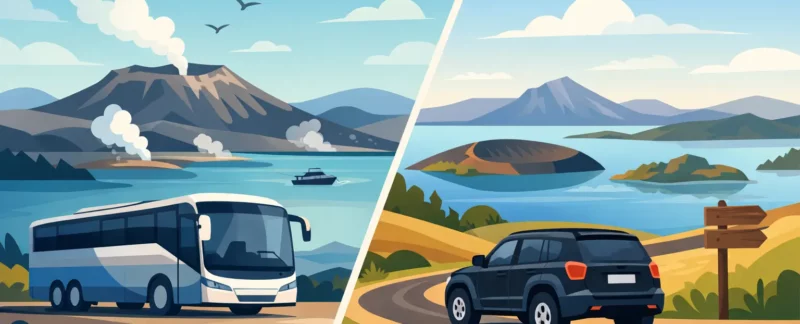
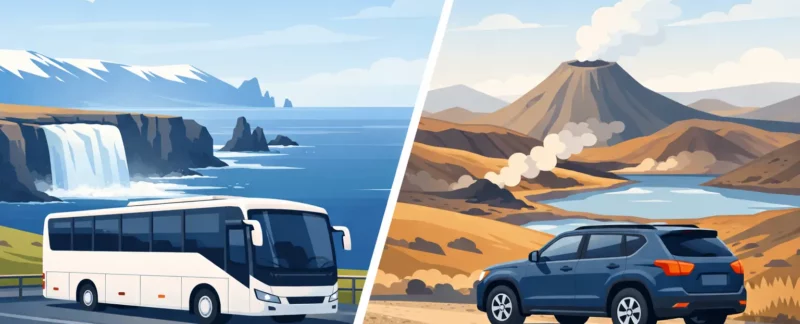
This is one reason many travelers choose a guided day trip instead of self-driving. A local guide brings road judgment, weather awareness, and a vehicle suited to the conditions. Just as important, you can spend the day looking out the window instead of gripping the steering wheel and wondering whether the next section is worse than the last.

Weather matters more than your itinerary

One of the safest habits in Iceland is being willing to change the plan. Askja is a very good place to practice that habit.

Highland weather does not care that you booked one specific day months ago. Strong wind can make walking unpleasant or unsafe near exposed sections. Fog can flatten the landscape and reduce visibility. Rain can make the hike slick and make the road slower. Early or late in the season, snow patches can linger longer than people expect.

If you want to know how to see Askja safely, start by asking a better question: should I go today at all? Sometimes the safest and smartest answer is no. That is not a ruined trip. That is good judgment.

A private guided trip is especially useful here because the day can be adjusted around conditions. Sometimes that means changing departure time. Sometimes it means combining highland driving with other stops if Askja is not sensible. Flexibility is not just nice service in Iceland. It is part of safety.

The hike from the parking area

Even after the drive, Askja still asks for a bit of effort. From the parking area, there is a walk across uneven terrain to reach the caldera area and the viewpoint over Víti. The trail is not technical in the mountaineering sense, but it is not a paved stroll either.

Good footwear matters. You want sturdy hiking shoes or boots with grip, not smooth sneakers that were comfortable in Reykjavík. The ground can be dusty, rocky, muddy, or slippery depending on recent weather. If you have knee or balance concerns, take that seriously before you go. The route is manageable for many people, but it still requires steady footing.

Bring layers, even on a mild day. A hat and gloves are not overcautious in the highlands. Neither is water. People often underestimate the walk because the destination is so famous, but famous places can still be physically demanding when they are this remote.

Pacing matters too. There is no prize for rushing to the rim. Walk steadily, stop when you need to, and save energy for the return. I often find that travelers enjoy Askja more when the day is allowed to breathe a little. The place has space in it. You do not need to race through it.

Timing, daylight, and energy

Askja is best done with plenty of daylight and no pressure to hurry back. In summer, that is easier in Iceland than in many places, but long daylight can fool people into overcommitting. Just because the sun is still up does not mean your concentration is.

The drive can be tiring even for experienced travelers. Gravel roads demand attention, and long remote stretches can wear you down. If you are self-driving, be honest about how you handle fatigue. If you have already driven a lot the previous day, Askja may not be the right addition.

This is another reason a dedicated day works better than trying to squeeze Askja into a broader circuit. The safest version of the trip is usually the least rushed one.

What to bring for a safe Askja trip

You do not need expedition gear, but you do need the basics done properly. Warm layers, a waterproof outer layer, solid footwear, water, and food are the essentials. A fully charged phone helps, though you should not depend on coverage.

It is also wise to tell someone your plan if you are going independently. In remote areas, that simple step matters. If you are traveling with children or older family members, extra snacks, warmer layers, and a realistic pace make a big difference to everyone’s day.

Photographers often ask whether they can carry full camera kits on the walk. Usually yes, but only if it does not compromise your balance or energy. Askja is beautiful in all kinds of light, but a safe footing is worth more than one extra lens.

When a guided trip is the safer choice

Some travelers are very capable on rough roads and comfortable reading conditions. Others are excellent travelers but simply do not want the stress of highland driving. There is no shame in that. In fact, it is often the wiser call.

A guided Askja trip makes the most sense if you are unfamiliar with Icelandic roads, traveling with family, hoping for local context, or wanting the day adapted to your pace. It also helps if you are staying in the north and would rather spend your time learning about the landscape than second-guessing every road sign and river crossing.

For a place like Askja, local knowledge is not just storytelling. It is knowing when conditions are normal, when they are not, and what a sensible backup plan looks like. That is where a private guide can change the day from stressful to memorable. At Kip, that is very much the point of the experience.

How to see Askja safely and still enjoy it

Safety at Askja does not mean turning the trip into a checklist of worries. It means giving yourself the best chance to be present once you are there. When the road, weather, and walking plan are handled well, Askja feels less intimidating and more like what it should be: one of Iceland’s most extraordinary volcanic landscapes.

Go on a day that makes sense. Wear what the highlands require, not what looked good in the forecast app. Leave room for the unexpected. And if the trip feels like too much to manage on your own, let somebody local take that weight off your shoulders. Askja is remote, but it does not have to feel uncertain when you approach it the right way.
Posted in kip

Guided Tour or Self Drive in North Iceland?

Some trips are easy to plan from a map. North Iceland is not always one of them. A road can look simple online, then turn into a full day of wind, changing light, gravel, and stops you did not know you would want to make. If you are deciding between a guided tour or self drive, the real question is not which option is better in general. It is which one fits the kind of trip you want to have.

For some travelers, driving yourself is part of the fun. You like the freedom, you do not mind adjusting on the fly, and you are comfortable making decisions as conditions change. For others, the best day is one where you can look out the window, ask questions, stop when something catches your eye, and let someone local handle the route, timing, and safety. Both approaches can work well here. The difference is what you want your energy to go toward.

Guided tour or self drive: what are you really choosing?

Most people frame this as independence versus convenience. That is true, but it is only part of the story. In North Iceland, you are also choosing between two very different ways of seeing a place.

A self-drive day often moves faster than expected. You are checking road conditions, watching fuel, looking for parking, keeping an eye on the weather, and deciding whether the next stop is worth the detour. None of that is wrong. It is simply work, even on vacation. On a guided day, that mental load drops away. You spend more time noticing the landscape and less time managing it.

You are also choosing how much context you want. A waterfall is beautiful on its own. It becomes more memorable when you understand how it formed, what people who lived nearby believed about it, how winter changes access, or why a quiet turnoff matters more than the busiest viewpoint. That layer of place is what many travelers miss when they drive themselves, especially on a short visit.

When self-drive makes good sense

If you are confident behind the wheel, comfortable with changing conditions, and happy keeping plans loose, self-drive can be a very good fit. It gives you privacy and control. You can leave early, stay late, skip a stop, or spend an hour with your camera if the light is right.

This option often suits travelers who already enjoy road trips as part of the destination. If you like researching routes, understanding road signs, and accepting that the day may shift because of weather, you may find self-drive rewarding rather than stressful.

It also works best when your route is straightforward and the season is forgiving. A summer day on well-traveled roads is one thing. A shoulder-season day with fog, wind, slick pavement, or reduced daylight is another. Even experienced drivers sometimes underestimate how tiring Iceland can be, not because distances are enormous, but because conditions ask for attention the whole time.

Self-drive can also be limiting in ways people do not expect. The driver cannot fully relax. In a place with wide open views, lava fields, waterfalls, and sudden wildlife, that matters. One person is always working while the other takes in the scenery.

When a guided tour is the better choice

A guided day tends to make the biggest difference when the route is more remote, the weather is unsettled, or you want more than a checklist of stops. It is especially useful if this is your first time in Iceland, if you are traveling with family, or if you simply want the day to feel easier.

North and northeast Iceland have places that are far more enjoyable when you are not the one making every decision. Areas with long distances between services, highland approaches, rougher roads, and shifting conditions can turn a simple outing into something more demanding than expected. That does not mean those places are off-limits. It means they are often better experienced with someone who knows how the day usually unfolds and when to change course.

A private guided tour also gives you flexibility without putting the responsibility on you. That part matters. People sometimes assume a guided trip means fixed timing and a rigid script. In reality, a good private guide adjusts to the group. Some guests want geology, some want folklore, some want quiet scenic time, and some want help finding the best angles for photographs. The day can bend around that.

For older travelers or visitors who would rather not spend their vacation driving, the value is simple. You save your attention for the experience itself. For families, it often means less stress and fewer logistics. For photographers, it can mean reaching the right spot at the right time instead of guessing and hoping.

Guided tour or self drive in different seasons

Season changes this decision more than many travelers realize.

In summer, self-drive is at its easiest. There is more daylight, more room for improvisation, and a lower penalty for taking a wrong turn or moving slowly. If your route stays on easy roads and you enjoy independence, summer is the season when self-drive makes the strongest case.

Winter shifts the balance. Shorter days, snow, ice, drifting wind, and quick weather changes can make even familiar roads feel serious. A route that looks manageable on paper may become tiring or unrealistic once you account for conditions and daylight. In winter, guided travel is often less about luxury and more about making the day practical, comfortable, and safe.

Shoulder seasons sit somewhere in between. Spring and fall can be wonderful, but they ask for flexibility. A morning may start calm and end with poor visibility. Road access can change. Trails can be muddy or icy. These are the months when local judgment quietly becomes very valuable.

What local knowledge changes

The biggest benefit of going with a local guide is not that they know where the famous places are. Anyone can find those. The real difference is judgment.

Local knowledge helps with timing, route order, weather reading, and small decisions that shape the day. It can mean visiting a popular site when it is quieter, choosing a better viewpoint for the light, or skipping a stop that looks good online but is not worth your limited time. It can mean knowing when a valley is sheltered from the wind, when a road is likely to be rougher than expected, or when the best stop is one not marked as a highlight at all.

That is especially true in a region where landscape, history, and geology are tied together. A place becomes richer when someone can explain not only what you are seeing, but why it matters here and to the people who know it as home.

The comfort question people forget to ask

Many travelers focus on cost, freedom, or itinerary. A more useful question is this: how do you want to feel at the end of the day?

If your ideal day ends with the satisfaction of having handled the route yourself, self-drive may be exactly right. If your ideal day ends with good photos, real conversation, less fatigue, and the sense that you understood more than you could have on your own, a guided tour may fit better.

Comfort is not only about the vehicle. It is about decision-making. It is about whether you want to spend your energy navigating or noticing. Neither answer is more adventurous. They are simply different kinds of travel.

A simple way to decide

If your plan centers on easy roads, long daylight, and the pleasure of doing things at your own pace, self-drive can be a great option. If your plan includes remote areas, winter travel, photography goals, family logistics, or a wish to understand the region beyond the surface, a private guided day is often the stronger choice.

At Kip, many guests choose a guided day not because they cannot drive, but because they do not want driving to be the main job of the trip. That is a sensible reason. Iceland asks enough of your attention on its own.

The best choice is the one that lets you enjoy the place in the way that suits you. If you are still undecided, think less about transport and more about what kind of memory you want to bring home. That usually gives you the answer.

Posted in kip

Is Askja Worth Visiting? An Honest Answer

If Askja is already on your mind, you are probably not looking for another pretty stop with a parking lot and a short walk. You are asking about one of Iceland’s more remote volcanic landscapes, a place that takes effort, planning, and a bit of patience. So, is Askja worth visiting? For many travelers, absolutely. But it is not a universal yes, and that is exactly why it helps to answer honestly.

Askja rewards people who want space, geology, and a stronger sense of Iceland’s interior. It is less about ticking off a famous landmark and more about the feeling of traveling into a highland environment that still feels wild. If that sounds like your kind of day, Askja can be unforgettable. If you mainly want easy access, short drives, and comfort stops every hour, it may not be the best fit.

Is Askja worth visiting for most travelers?

My short answer is this: Askja is worth visiting if the journey itself matters to you as much as the destination.

The road into Askja is part of the experience. You are heading into a landscape shaped by eruptions, lava, ash, and long winters. The scenery becomes broader, emptier, and more dramatic as you go. By the time you reach the trailhead and continue on foot toward the caldera and Víti crater, you have already seen a side of Iceland many visitors never do.

That said, Askja is not an easy add-on. It takes time, favorable conditions, and the right vehicle. For some travelers, that effort is exactly what makes it special. For others, it becomes a very long day with more driving than they expected.

What makes Askja so special?

Askja is one of those places where the geology does not sit quietly in the background. It is the main event.

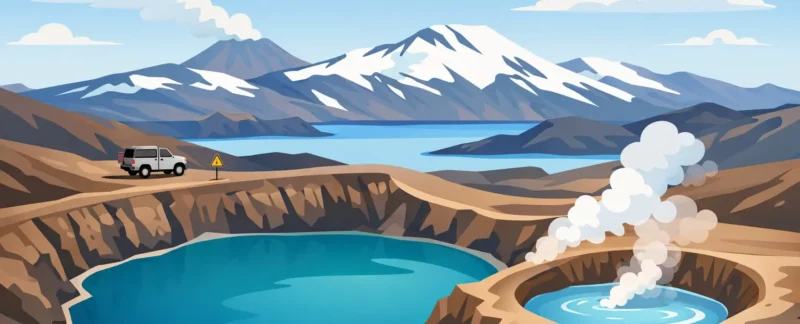
This is an active volcanic system in the Icelandic Highlands, and the landscape carries that story clearly. The caldera is stark and powerful rather than lush or cozy. Nearby, the Víti explosion crater holds a milky blue lake that looks almost unreal against the darker volcanic ground. The contrast is striking, especially on a calm day when the light is clear.

There is also a sense of scale that photographs do not always capture well. Askja feels big, exposed, and far from everything. That remoteness is part of its appeal. Travelers who enjoy places that feel raw and unpolished often connect with Askja more deeply than with Iceland’s more crowded sights.

It also has cultural and scientific significance. This is a landscape that has drawn geologists, adventurers, and curious travelers for generations. You do not have to be an expert to appreciate it, but if you like understanding how Iceland was formed, Askja gives you a very direct look at that story.

When Askja is absolutely worth it

Askja tends to be most rewarding for a few types of travelers.

If you love volcanic landscapes, this is one of the strongest day trips in the north and northeast when conditions allow. If you are a photographer, the textures, colors, wide views, and changing light can be excellent. If you have already seen waterfalls, black sand, and the more accessible highlights around Iceland, Askja offers something with a very different mood.

It is also a good choice for travelers who want a private, flexible experience rather than a fixed group schedule. A place like this benefits from local judgment. Road conditions can change, weather can shift, and the pace of the day matters. Some guests want extra time to walk and photograph. Others want more context about eruptions, terrain, and local history. Askja works best when the day can adapt to the people in the vehicle.

For older travelers or visitors who are unsure about highland driving, Askja can still be worth visiting if someone else is handling the logistics. That often changes the day completely. Instead of worrying about river crossings, rough roads, and route decisions, you can focus on the landscape.

When Askja may not be worth visiting

There are a few honest reasons to skip it.

If you get carsick easily, the rough highland roads may wear you down. If you dislike long travel days, Askja can feel demanding. If your idea of a great Iceland day includes frequent cafés, easy restrooms, and several different attractions packed together, this is probably not your best match.

Askja is also not ideal for travelers who want certainty in every detail. Highland travel depends on road openings, snow conditions, weather, and timing. Even in summer, flexibility matters. Sometimes the best decision is to go. Sometimes the smart decision is to choose a different route.

And while the walk to the main viewpoint is manageable for many people, it is still a real walk in an exposed environment. You do not need to be an athlete, but you should be comfortable on uneven ground and prepared for wind and changing weather.

The road to Askja matters more than people think

One reason people ask, “is Askja worth visiting,” is because they are really asking whether the effort pays off.

That is a fair question. Askja is not just about arriving, taking a few photos, and leaving. The journey through the highlands is long and part of what gives the destination its meaning. On a good day, that road feels like a gradual shift into another version of Iceland – less visited, less softened, and more elemental.

On a difficult day, it can simply feel long.

This is why expectations matter. If you know in advance that Askja is a full experience rather than a quick stop, you are much more likely to enjoy it. People who arrive expecting convenience can be disappointed. People who arrive wanting remoteness usually leave very happy.

Best time to visit Askja

Askja is generally a summer-access destination. The access roads into the highlands are seasonal, and the opening window depends on snowmelt and conditions each year.

Even during the accessible season, weather plays a big role. A clear day can make the landscape feel sharp, spacious, and unforgettable. Low cloud, heavy wind, or rain can change the mood completely. That does not always make the trip bad, but it does make it more serious.

This is one of those Iceland destinations where local advice is worth listening to. Conditions on paper and conditions on the ground are not always the same thing.

Is Askja worth visiting compared with Lake Mývatn or the Diamond Circle?

It depends on what kind of day you want.

Lake Mývatn offers variety, easier access, and a rich mix of geothermal areas, lava formations, and history. The Diamond Circle gives you dramatic sights with less commitment to rough-road travel. Both are excellent options, especially for first-time visitors or anyone who wants a fuller day with more stops and less uncertainty.

Askja is different. It is more singular. More remote. More about immersion in one powerful landscape than about collecting several landmarks in a day. Some travelers find that more meaningful. Others prefer the variety and comfort of the better-known routes.

Neither choice is more correct. It is a question of temperament.

Who should consider a guided Askja day

Askja is one of the clearest examples of when a guided day can make real sense, not just for convenience but for peace of mind.

The roads are rough, conditions can change, and there is value in traveling with someone who knows how the day should flow. A local guide can also help translate what you are seeing. Without context, Askja can feel like a striking but empty volcanic basin. With context, it becomes a much richer place – a story of eruptions, landscape change, isolation, and how people relate to Iceland’s interior.

For private travelers, there is another benefit: flexibility. If the weather shifts, if walking pace is slower, if you want more time for photography, or if a different route makes more sense that day, the experience can adjust. That matters in the highlands.

At Kip, Askja is the kind of tour we approach with respect for the conditions and for the guests in the vehicle. Some people want the geology. Some want the silence. Some just want to see a part of Iceland that feels farther away from the usual route. All of those are good reasons.

So, is Askja worth visiting? Yes, if you are drawn to remote volcanic landscapes and you understand what the day asks of you. It is not Iceland at its easiest, but it is very much Iceland at its most memorable. If that is what you came for, Askja has a way of staying with you long after the dust is off your boots.

Posted in kip

North Iceland Tours That Feel Personal

Some North Iceland tours look great on paper and still leave people oddly detached from the place. You stop, take the photo, get back in the vehicle, and move on. If what you want is a real sense of the landscape and the stories behind it, the format of the tour matters as much as the route.

That is especially true in the north, where distances are bigger than many visitors expect, weather can change the character of a day in an hour, and the best moments are often the ones that do not fit neatly into a rigid bus schedule. A good day here is not just about checking off Lake Mývatn, a waterfall, and a canyon. It is about having enough local context to understand what you are looking at, and enough flexibility to follow what interests you most.

What makes North Iceland tours worth doing

North Iceland has a different rhythm than the southwest. The roads are quieter, the views open up more slowly, and the contrast between volcanic terrain, green valleys, coastal cliffs, and glacial rivers feels stronger because there is often less traffic around you. For many travelers, that is exactly the appeal.

The challenge is that this part of Iceland rewards local knowledge. A map will show you the major sights, but it will not tell you when low cloud will hide the highlands, which detour is worth the time, or why one geothermal area feels completely different from another. It will not explain the farming history behind a valley, the folklore tied to a canyon, or how winter light changes a familiar route.

That is where private guiding starts to make sense. Not because every visitor needs a fully customized day, but because North Iceland tours tend to be better when they adapt to the season, road conditions, energy level, and interests of the people actually taking them.

Private North Iceland tours vs. standard group trips

A large group tour can be the right choice if your main goal is simple transportation to major sights. Some travelers are perfectly happy with that. If you like a fixed schedule, do not mind moving at the group’s pace, and want a straightforward overview, it can work well.

But there are trade-offs. The day is usually built around timing rather than curiosity. Stops are shorter, questions are harder to ask in depth, and there is less room for weather-based decisions. In North Iceland, that matters more than people often realize.

A private tour changes the shape of the day. You can spend longer where the light is good, move faster through a stop that does not interest you, or make space for a quieter viewpoint that never shows up on a typical checklist. That flexibility is useful for couples, families, photographers, older travelers, and anyone who would rather not spend a long day climbing in and out of a crowded vehicle.

It also helps with comfort. Winter roads, shoulder-season conditions, and remote routes can feel stressful if you are self-driving in an unfamiliar country. Having a certified local guide behind the wheel lets you focus on the landscape instead of worrying about ice, wind, or the next gas station.

The routes that usually matter most

If you are choosing among North Iceland tours, the right route depends less on what is famous and more on what kind of day you want.

Lake Mývatn and the volcanic landscape

This is often the best fit for first-time visitors because it gives you a lot in one day. You get geothermal areas, lava formations, pseudocraters, wide lake views, and a strong sense of how geology shaped both the land and local life. It is one of the few areas where you can have a visually dramatic day without spending all your time in the vehicle.

The best version of this tour is not rushed. Mývatn is a place where small differences matter – one crater row, one lava field, one steam area may look similar in photos, but feel completely different in person once the geology is explained properly.

Diamond Circle and Ásbyrgi

This route suits travelers who want scale. The Diamond Circle brings together some of the north’s biggest contrasts, from powerful waterfalls to horseshoe-shaped canyons and long stretches of open country. It is a strong choice if you want a full day with dramatic scenery and a bit more driving.

Ásbyrgi often stays with people because it feels so distinct from the rest of the region. The shape of the landscape, the vegetation, and the atmosphere make it more than just another stop. With the right pacing, this route feels varied rather than long.

Askja and the remote highlands

Askja is not for everyone, and that is exactly why it can be unforgettable. This is a tour for people who are drawn to remoteness, geology, and rougher landscapes. Conditions matter a great deal, and access is seasonal, so this is not a route you choose casually.

If you are considering Askja, the main question is whether you want a polished sightseeing day or a deeper, more adventurous one. The payoff is huge, but so is the commitment in time and terrain.

Waterfalls, valleys, and quieter corners

Some of the best private days in the north are built around places that do not need much introduction. A good valley, a lesser-known waterfall, a stretch of old farming country, or a coastal road with changing light can be more memorable than a day spent racing between the most photographed sites.

This approach works particularly well for repeat visitors or travelers who already know they prefer fewer stops and more breathing room.

How to choose the right tour for your travel style

Start with your energy, not your bucket list. That sounds simple, but it saves a lot of disappointment. If you are arriving after a long flight, traveling with kids, managing mobility concerns, or just not interested in a ten-hour sightseeing sprint, say that early. A well-designed private day should fit you, not the other way around.

Think about what you actually enjoy during travel. Some people want the geology explained in detail. Some want local history and daily life. Some care most about photography and timing. Others just want a calm, beautiful day without the stress of driving. All of those are valid, but they lead to slightly different tour choices.

Season matters too. Summer gives you range, easier access, and long light. Winter can be extraordinary, but it asks for more flexibility. Snow, wind, and daylight hours affect what makes sense on any given day. In shoulder seasons, the smartest plan is often to keep priorities clear and expectations open.

Why local guiding changes the experience

A guide who knows North Iceland from lived experience brings something different than someone reading from a script. The landscape becomes more specific. A farm is not just a farm. A lava field is not just black rock. A weather shift is not just bad luck. There is context, memory, and practical judgment behind what you are seeing.

That personal connection also changes how the day feels. You are not being processed through a route. You are being hosted. For many travelers, that is the difference between a tour that was efficient and one they still talk about years later.

This is especially true in a region where conditions can change quickly and where some of the best decisions happen in real time. A local guide can read the day – the road, the sky, the light, the mood of the group – and make adjustments that make the experience better rather than simply longer.

Kip is built around that kind of guiding, with tours led by a certified local guide who grew up near Lake Mývatn and knows how to shape the day around the people in the vehicle, not just the route on a brochure.

A few practical questions to ask before you book

Before choosing among North Iceland tours, ask who is actually guiding the day, whether the itinerary is fixed or flexible, what pickup options are realistic for where you are staying, and how the tour handles changing weather or road conditions. Those details are not small print. They often determine whether the day feels easy or frustrating.

It is also worth asking how much walking is involved and whether the tour can be adjusted for your group. A route that is wonderful for one couple may be tiring for a family with young children or less appealing for travelers focused on photography rather than frequent short stops.

The best conversations before a tour are usually the most honest ones. If there is a place you care about, mention it. If there is a place you are unsure about, say that too. A private day works best when expectations are clear on both sides.

The north does not need much help from marketing. On the right day, it speaks for itself. What matters is giving yourself enough time, flexibility, and local insight to hear what it is saying.

Posted in kip

8 Best Day Trips from Mývatn

Some places around Lake Mývatn are so close and varied that choosing the best day trips from Mývatn is less about finding the single “must-see” stop and more about matching the day to the weather, the roads, and your energy. One morning might call for a short scenic loop with geothermal stops and easy walks. Another might be perfect for a long drive into big, empty highland country. That is part of what makes this area such a good base.

If you are staying in Mývatn for a few days, you can reach waterfalls, canyon viewpoints, historic farm country, coastal villages, lava fields, and remote interior landscapes without changing hotels every night. The trade-off is that not every route suits every traveler. Some day trips are simple and comfortable in almost any season, while others depend heavily on road conditions, daylight, and confidence behind the wheel.

Best day trips from Mývatn for different travel styles

The best choice depends on what kind of day you want. If you like dramatic scenery with relatively little driving stress, Goðafoss and the surrounding valley are an easy win. If you want the full North Iceland classic, the Diamond Circle gives you a longer day with a lot of variety. And if you came to see parts of Iceland that feel genuinely remote, Askja or Flateyjardalur can be unforgettable when conditions allow.

What follows is not a race to tick off the most sights. It is a practical look at which trips are worth your time, what makes each one different, and when it may be smarter to go with a local guide rather than tackle the route on your own.

1. Goðafoss and the upper Bárðardalur area

Goðafoss is one of those waterfalls that works for almost everyone. It is easy to appreciate, easy to access, and beautiful in very different weather. In summer, the blue water and broad horseshoe shape are the main draw. In winter, the contrast between ice, spray, and dark rock can be striking.

As a day trip from Mývatn, this one is flexible. You can keep it short and simply visit the waterfall, or you can build a fuller day around the valley, nearby viewpoints, and smaller historical or rural stops. It suits families, older travelers, and anyone who does not want to spend the whole day in the car.

The main advantage here is balance. You get a major landscape feature without committing to a demanding route. If the forecast is mixed or the roads are uncertain farther east, this is often a sensible choice.

2. Húsavík and the Tjörnes coast

If you want a change from inland volcanic scenery, Húsavík gives you a coastal day with a very different mood. The town itself is compact and pleasant, and the drive there opens up views toward the bay and the mountains beyond. Depending on the season, this can be a good option for whale watching, harbor photography, or simply a slower day with sea air and a hot drink after a windy walk.

The Tjörnes peninsula nearby adds more character to the trip. It feels more open and exposed than the Mývatn area, with seabird cliffs, layered geology, and a stronger sense of the Arctic coast. It is not the most dramatic route in every stretch, but it has depth if you enjoy landscape changes and quieter places.

This trip is especially good for travelers who want a break from sulfur, steam, and lava fields without giving up interesting geology.

3. The Diamond Circle to Ásbyrgi and Dettifoss

For many visitors, this is the big one. If you have a full day and want to see why northeast Iceland leaves such a strong impression, the Diamond Circle is one of the best day trips from Mývatn. It combines several major sights that feel completely different from one another.

Dettifoss brings sheer force. Even people who have seen many waterfalls tend to stop talking for a moment when they get close enough to feel the vibration and spray. Ásbyrgi, by contrast, is calm, green, and oddly sheltering, with its horseshoe-shaped canyon walls creating a landscape that feels almost hidden. If you connect these with Húsavík or other stops along the route, you get a day that moves from raw power to quiet spaces to coastal views.

The trade-off is time. This is not the day to start late, wander without a plan, and hope it all sorts itself out. Road surfaces and seasonal closures matter, and some travelers will enjoy this much more with a guide who can manage the pacing. Still, if you want one memorable long outing from Mývatn, this route has a strong case.

4. Askja for a true highland day

Askja is not a casual add-on. It is a serious day into the interior, and that is exactly why some travelers remember it more vividly than anything else. The route crosses a stark volcanic landscape shaped by eruptions, ash, lava, and distance. By the time you reach the caldera area, the sense of scale is very different from what you find around the Ring Road.

This trip is best for travelers who are comfortable with a long day and are specifically looking for remoteness. It is also one of the clearest examples of when local experience matters. Highland access depends on season, road openings, vehicle capability, and current conditions. A map may make it look straightforward. The reality can be less forgiving.

When it works, though, Askja feels like another world. If your idea of a great day is less about comfort and more about seeing Iceland at its most austere and geologically alive, it belongs high on the list.

5. Flateyjardalur for solitude and local character

Flateyjardalur is not always the first place visitors hear about, which is part of its appeal. This valley has a quieter, more personal kind of beauty. The scenery is broad and atmospheric rather than flashy, and the route can feel like a conversation with the landscape instead of a procession of famous stops.

For photographers and repeat visitors especially, this can be a rewarding choice. Light, weather, and season shape the experience in obvious ways, and the valley often feels different hour by hour. It is also a good example of why private guiding can change a day entirely. Places like this make more sense when someone local can explain the farms, the terrain, the old routes, and what you are actually looking at.

If your taste runs toward quieter roads and fewer people, this trip may suit you better than a more famous circuit.

6. The Krafla and Víti area as an easy half- to full-day outing

Not every day trip from Mývatn needs to be long. The Krafla volcanic system and the Víti crater area are close enough that you can visit without turning the day into a major expedition. That makes this a strong option if you arrived late the night before, are traveling with mixed energy levels, or want time for a slower lunch and extra stops.

This area gives you a lot of geological context with relatively little effort. You see how active and unstable the region has been, and the landscape has that raw, young volcanic feel that draws many people to Mývatn in the first place. Combined with nearby geothermal areas, it can fill a day nicely without requiring much road time.

This is also one of the better choices when weather is variable. If conditions shift, it is easier to adjust plans close to base.

7. Dettifoss and Selfoss on their own

If Ásbyrgi feels like too much to add, Dettifoss and Selfoss can stand alone as a focused day. That is often the smarter choice for travelers who prefer fewer stops and more time at each one. The contrast between the two waterfalls is part of the appeal. Dettifoss is about mass and impact. Selfoss is wider, more detailed, and often more photogenic in a quieter way.

This trip works well for people who enjoy walking to viewpoints and spending time with one landscape rather than skimming through five. It can also pair well with smaller roadside stops depending on road choice and season.

8. Akureyri and Eyjafjörður for a town-and-scenery day

Not everyone wants every day to be pure wilderness. Akureyri offers a different kind of outing, with a small city feel, sheltered fjord views, cafés, and a chance to reset before heading back into more remote country. The drive through Eyjafjörður is scenic in its own right, especially when the weather is clear and the light sits well on the slopes above the fjord.

This can be a very good choice for families, travelers wanting easier facilities, or anyone mixing nature days with a bit of urban comfort. It is less wild than Askja and less dramatic than Dettifoss, but that is not a weakness. Sometimes the best choice is simply the one that gives your trip a different rhythm.

How to choose the right Mývatn day trip

A good rule is to be honest about road comfort, not just interest. Many visitors are drawn to the most remote places, but there is no prize for spending a long day tense behind the wheel. If gravel roads, weather shifts, or narrow timing windows make you uneasy, choose a route that lets you relax and actually take in the scenery.

Season matters too. A trip that is simple in July may be unrealistic in winter, and some of the best highland routes are not even options for much of the year. This is where local advice matters more than generic planning. The strongest itineraries around Mývatn are rarely the busiest ones. They are the ones that fit the day you actually have.

If you want flexibility without guessing, a private guide can make these outings feel much easier and more personal. Someone born and raised near Lake Mývatn will read the conditions, pacing, and small details differently than a visitor can. And that usually means less time worrying, more time looking out the window, and a day that feels like it was built for you rather than borrowed from a checklist.

The nicest thing about using Mývatn as your base is that you do not have to force every day into the same shape. Pick one long adventure, one easy scenic outing, and one place you would probably never have found on your own. That is often when North Iceland starts to feel less like a route and more like a place.

Posted in kip

How to Explore Mývatn Geology Well

You do not need to be a geologist to feel that Mývatn is different. The ground hisses, the lava looks freshly torn open even when it is centuries old, and one short drive can take you from pseudocraters to steaming vents to a volcanic fissure that changed Iceland’s history. If you are wondering how to explore Mývatn geology in a way that makes sense rather than just checking stops off a map, the best approach is to read the landscape in layers.

This is one of those places where the scenery is not random. Every crater rim, lava shape, and patch of sulfur-stained earth belongs to a story about fire, water, ice, and time. The area rewards curiosity, but it also rewards pacing yourself. If you rush, Mývatn can feel like a string of roadside attractions. If you slow down, it starts to feel like a living textbook written by volcanoes.

How to explore Mývatn geology without rushing it

The mistake many visitors make is trying to see everything as separate sights. In reality, the geology around Mývatn works best when you group places by process. Start with features formed by lava and water, then move to active geothermal areas, and finish with larger volcanic systems that help explain the scale of what you are looking at.

That order matters because it gives you a framework. First you see how lava met wet ground and shallow lakes. Then you see what happens when heat remains close to the surface. After that, broader landscapes like fissures and calderas feel less abstract.

If you have only half a day, focus on Skútustaðagígar, Dimmuborgir, and Hverir. Those three stops alone explain a surprising amount. If you have a full day, add Krafla and Leirhnjúkur. If you have more time, slow the pace and revisit one or two sites in different light. Mývatn changes character with weather and time of day more than many first-time visitors expect.

Start with water and lava at the lake

The pseudocraters at Skútustaðagígar are one of the best places to begin. They look like volcanic craters, but they were not formed by eruptions that blasted material up from a vent. Instead, hot lava flowed over wetlands or shallow water, steam built up underneath, and the surface exploded from that pressure. It is a good introduction because it immediately teaches an important lesson about Mývatn geology – not every crater is a true crater.

That small distinction changes how you see the whole area. Lake Mývatn itself exists in a volcanic setting shaped again and again by lava flows, explosions, and shifting terrain. The pseudocraters show that water has been just as important as magma in creating the landscape.

This is also an easy place to walk and get your eye in. You are not dealing with a huge climb or technical terrain, so you can concentrate on form, spacing, and the way the land sits around the lake. For families, older travelers, or anyone easing into the day, it is a kind start.

Read the lava at Dimmuborgir

Dimmuborgir is where many people stop saying, “That’s interesting,” and start saying, “What happened here?” The lava formations are dramatic enough to grab anyone’s attention, but the real value of the site is that it shows how molten rock behaves when gases, cooling, and uneven ground all come into play.

Some of the towers and arches were created when the outer crust of lava cooled while hotter material kept moving beneath or around it. In other places, trapped gases and collapsing surfaces helped shape the strange architecture. The result looks almost built rather than formed, which is part of what makes the area so memorable.

There is a trade-off here. Dimmuborgir is one of the most accessible and popular stops, so it can feel busy, especially in the middle of the day. If you want quiet and better conditions for photography, early morning or late evening is usually far better. The rock textures also stand out more in low-angle light than under flat midday skies.

See active heat at Hverir

If Dimmuborgir shows what lava leaves behind, Hverir shows that the underground system is still very much alive. The mud pots, steam vents, and orange-brown mineral stains are not subtle. You smell the sulfur before you fully see the field, and that is part of the experience. This is geology happening now, not just geology preserved in the past.

Hverir is one of the clearest places to understand geothermal activity in simple terms. Groundwater is heated by shallow magma or hot rock, gases rise, and the surface becomes unstable, acidic, and chemically altered. That is why the ground looks almost painted in places.

It is also where safety matters most. Stay on marked paths. The surface can be thinner and hotter than it appears, and this is not the kind of place to test your luck for a better photo angle. On a windy day, steam can drift quickly and reduce visibility, so even short walks require a little attention.

Go farther into the system at Krafla and Leirhnjúkur

If you really want to understand how to explore Mývatn geology, make time for Krafla. This is not just one stop but part of a wider volcanic system with a caldera, fissure swarms, lava fields, and a history of eruptions that continued into modern times. Suddenly the smaller features around the lake begin to connect.

The Leirhnjúkur area is especially useful because you can walk across young lava and see how raw volcanic ground slowly settles into a landscape. The earth still feels unfinished there. In some sections the rock remains jagged and dark, while in others steam escapes through cracks as a reminder that cooling is still in progress on a geological timescale.

Nearby Víti adds another piece of the story. Its crater and lake make an immediate visual impression, but it also helps explain explosive volcanic events in the Krafla system. Conditions can change quickly with weather, though. Fog, wind, or snow can flatten the view, so flexibility helps. This is one reason private guiding works well in the area – sometimes the smartest plan is simply changing the order of stops to match the day.

Notice what the weather changes

Mývatn geology is not only about rock type or eruption history. It is also about visibility. Rain deepens color in the lava. Low cloud can make steam fields feel more dramatic but can hide larger landforms. Snow simplifies everything and makes volcanic shapes easier to read in some places, harder in others.

That means there is no single perfect season for everyone. Summer gives longer hours and easier access. Fall often brings strong color and softer light. Winter can be beautiful and quiet, but road and walking conditions demand more care. Spring is less predictable, which some travelers enjoy and others do not.

For photographers, this matters a lot. For first-time visitors, it matters in a more practical way. A site that looks straightforward on a sunny afternoon can feel exposed and slippery in wind or ice. Good planning in Mývatn always includes a little humility.

A local approach works better than a checklist

The best way to explore this area is to let one question lead to the next. Why are these craters different from those? Why is one lava field smooth and another broken? Why does steam rise here but not a few miles away? That approach turns a sightseeing day into something much more memorable.

It also helps to accept that not every stop needs the same amount of time. Some places are best understood in fifteen focused minutes. Others deserve a slower walk and a few quiet pauses. There is no prize for collecting the most parking lots in a day.

As someone who knows this region from the inside, I can say that the geology around Mývatn becomes more rewarding when it is explained in plain language and seen in the right order. That is often the difference between a nice day out and a place you will still be thinking about long after the trip ends.

How to explore Mývatn geology comfortably and safely

Wear boots with decent grip, even if the walk looks easy from the parking area. Bring layers because steam fields and crater rims can feel very different from one another, especially with wind. And give yourself permission to do less. Mývatn is not a place to race through.

If driving conditions, winter roads, or route planning feel like a distraction, it can be worth seeing the area with a certified local guide who can shape the day around your pace and interests. Some travelers want the broad overview. Others want the volcanic story in detail. Both are good ways to experience the region.

The useful thing to remember is that Mývatn does not ask for expertise first. It asks for attention. Once you start noticing how heat, water, and lava keep answering each other across the landscape, the whole area begins to speak more clearly.

Posted in kip

North Iceland Road Conditions Tips That Help

A road can look calm in North Iceland right up to the moment the wind shoves snow across it or a gravel section turns washboard rough. That is why North Iceland road conditions tips are less about memorizing rules and more about learning how this region behaves. Distances look short on a map, but weather, light, and road surface can change the day quickly.

If you are visiting for the first time, the biggest mistake is assuming roads here work like roads back home. They do not. A beautiful route can also be narrow, icy, blind over hills, or temporarily impassable. None of that means you should be nervous about traveling here. It just means a little local judgment goes a long way.

North Iceland road conditions tips start with the weather

In North Iceland, weather is not background information. It is part of the road itself. Snow, drifting, freezing rain, thawing, and strong crosswinds all affect how a drive feels and how long it takes.

Winter gets the most attention, for good reason, but shoulder seasons deserve respect too. In late fall and spring, the road may look mostly clear while shaded stretches stay icy. You can leave one area in dry conditions and arrive at a pass where visibility drops fast. That is common enough that experienced local drivers rarely assume the next valley will match the last one.

Wind is the part many visitors underestimate. Ice is obvious. Wind is not. It can push a vehicle sideways, make steering tiring, and create sudden whiteout conditions when loose snow blows across the road. Even on a day that seems manageable in town, exposed sections can feel very different.

The practical lesson is simple: judge the day, not just the destination. If the weather shifts, your plan should be allowed to shift with it.

Know what kind of road you are actually driving

Not every road in North Iceland asks for the same skills. Some main routes are paved and maintained regularly, but that does not make them automatically easy. In winter they can still be slick, snow-covered, or reduced to a single visible track between snowbanks.

Gravel roads are another category entirely. In dry weather they may be straightforward if you reduce speed and stay alert. After rain, thaw, or sustained traffic, they can become loose, rutted, or uneven. Drivers unfamiliar with gravel sometimes brake too hard or steer too suddenly, which creates more trouble than the surface itself.

Then there are mountain and highland approaches, which are highly seasonal and not casual detours. Some roads that look tempting on a map are only suitable in a proper vehicle and only when conditions allow. A road being open at one time of year does not mean it is wise for every traveler.

This is where local knowledge matters. A route may technically be passable but still be a poor choice if you are tired, arriving late, or not comfortable on narrow gravel with no guardrails. Safe travel is not just about legal access. It is about margin.

Paved does not always mean easy

Visitors often relax once they are back on asphalt. That is understandable, but in North Iceland paved roads can still include frost, black ice, hard-packed snow, and strong wind exposure. Bridges may be narrow, shoulders can be soft, and visibility over crests is sometimes limited.

Treat paved roads here as more forgiving, not foolproof.

Gravel requires patience more than bravery

On gravel, speed is usually the problem. Slow, steady driving gives you options. Fast driving makes every loose patch feel dramatic. If you are heading toward remote sights, plan extra time so you are not tempted to rush.

Timing matters more than mileage

A route that says two hours in ideal conditions may take much longer in real North Iceland travel. That is not because anything has gone wrong. It is because road conditions, stops, and daylight all matter.

In winter, short daylight changes everything. You may begin in soft morning light and return in darkness on a colder road surface. In summer, long days can encourage people to overpack an itinerary. The trap there is fatigue. Long drives on quiet roads, even scenic ones, can wear down concentration.

My advice is to build slack into the day. If you think you need every minute to make a route work, the route is probably too ambitious. North Iceland rewards travelers who leave room for weather, coffee, photo stops, and the occasional change of plan.

Vehicle choice is part of your safety plan

The right vehicle does not make poor decisions disappear, but it does improve your margin for error. In winter especially, a larger vehicle with proper tires can make a real difference in stability and comfort.

That said, people sometimes focus too much on the vehicle and too little on the driver. Four-wheel drive helps with traction and confidence, but it does not shorten braking distance on ice the way many visitors imagine. If the road is slick, you still need to slow down well before turns, bridges, and intersections.

Ground clearance also matters on rougher roads, but only if the road and season call for it. Not every traveler needs a big vehicle. What matters is matching the vehicle to the route, season, and your own comfort level.

North Iceland road conditions tips for winter driving

Winter driving here can be beautiful and completely manageable on the right day. It can also become stressful quickly if you treat it like ordinary winter driving elsewhere. The combination of wind, open terrain, drifting snow, and limited daylight is what catches people out.

Start by accepting that cancellation or delay is sometimes the smart choice. That is not failure. It is sensible travel. If visibility is poor or roads are icy and exposed, the best decision may be to stay put or shorten the day.

When you do drive, reduce speed earlier than feels necessary. Brake gently. Keep more distance than you think you need. Small, calm steering inputs matter. So does avoiding sudden confidence after a few easy miles. Conditions are rarely uniform for long.

It also helps to keep your fuel level comfortably above empty in winter. Services are not everywhere, and weather can slow a day down. Dress as if you may need to step outside in freezing wind, not as if you are only moving from parking lot to cafe.

When local advice should outweigh your itinerary

Travelers often arrive with a fixed list of places they do not want to miss. I understand that. But North Iceland is a region where the best plan is often the plan that still makes sense at 9 a.m., not the one you wrote three months earlier.

If a local host, guide, or accommodation owner tells you a route is unwise that day, listen carefully. The value is not only in knowing whether a road is open. It is in knowing how that road tends to behave with a certain wind direction, recent snowfall, or thaw.

This is especially true for photographers and families. Photographers may be tempted by dramatic weather, and families may feel pressure to keep a full day on schedule. Both situations benefit from a calm second opinion. Sometimes the better experience comes from choosing a shorter route with more time outside and less tension in the car.

A few habits make a big difference

The safest drivers in North Iceland are usually not the boldest. They are the ones who stay observant and unhurried. They notice when the road begins to shine with frost, when the wind starts tugging at the vehicle, or when a gravel surface changes from firm to loose.

Pull over only where it is clearly safe and legal. Scenic roads invite sudden stops, but not every shoulder is stable, and not every viewpoint is a parking area. Keep your headlights on. Watch for one-lane bridges and blind rises. If another driver is moving faster, let them pass when there is a safe chance rather than letting pressure build behind you.

Most of all, avoid making the day harder because you want to salvage the original plan. There is no prize for stubborn driving in bad conditions.

If you want the scenery without the stress

For many visitors, the real question is not whether they can drive in North Iceland. It is whether they want to spend part of the trip watching the road instead of the landscape. That depends on the season, the route, and your confidence.

If you are uneasy about winter roads, remote gravel sections, or changing conditions around places like Mývatn, Dettifoss, or the Diamond Circle, going with a local driver-guide can be a much better use of the day. It gives you local judgment, flexibility, and the freedom to look out the window instead of gripping the steering wheel. That is one reason many guests who travel with Kip choose a private day tour for the more demanding routes and keep their self-drive days for easier weather and roads.

North Iceland is generous to travelers who respect it. Give yourself more time, less ego, and a plan that can bend with the weather, and the roads here usually feel a lot friendlier.

Posted in kip

Mývatn Tour or Self Drive? What Fits Best

You can circle Lake Mývatn in a day and still feel like you only skimmed the surface. That is why the question of Mývatn tour or self drive comes up so often. On a map, the distances look easy. In real life, the day can shift with weather, road conditions, light, energy level, and how much you want to understand what you are seeing.

For some travelers, renting a car and going at their own pace is exactly right. For others, a guided day with a local is the difference between checking off stops and actually settling into the landscape. Neither option is automatically better. The better choice depends on how you like to travel, what season you are visiting, and how comfortable you are with Icelandic roads and changing conditions.

Mývatn tour or self drive: the real difference

The biggest difference is not transportation. It is how your day feels.

A self-drive day gives you independence. You decide when to leave, where to stop longer, and whether to skip a place entirely. If you enjoy planning routes, reading signs, and adjusting things as you go, driving yourself can be part of the fun. Lake Mývatn is one of those areas where many highlights sit fairly close together, so it can look very manageable.

A guided tour changes the experience in another way. You are not spending the day watching the road, checking forecasts, wondering whether the gravel section is worth it, or trying to guess which parking area leads to the best viewpoint. You can simply look outside, ask questions, and let the day unfold with someone who knows the area well.

That matters more at Mývatn than many first-time visitors expect. This is not just a pretty lake with a few roadside stops. It is a geological region shaped by eruptions, lava, geothermal activity, and local history. If no one explains what you are looking at, some places can feel like a short walk to a viewpoint. With context, the same place becomes much richer.

When self-drive makes the most sense

Self-drive is often a good fit for travelers who genuinely like being independent. If you are comfortable behind the wheel, confident reading road and weather conditions, and happy to do some homework before the trip, you can have a very good day around Mývatn.

It also suits people who want a looser schedule. Maybe you like the idea of lingering at a crater rim, stopping for photos every ten minutes, or changing plans on the spot if a place feels crowded. Driving yourself gives you that control.

In summer, this option becomes easier for many visitors. There is more daylight, roads are generally simpler, and there is less pressure around timing. The main challenge then is not harsh weather but pacing. It is surprisingly easy to cram too much into one day and spend more time getting in and out of the car than actually being present.

Self-drive also works best when everyone in the car is comfortable with the trade-offs. One person will usually carry more of the mental load. That person handles navigation, parking, road awareness, and the quiet stress of making the day work. If you do not mind that role, fine. If you would rather share the experience equally, it is worth noticing.

When a Mývatn tour is the better choice

A guided tour is often the better choice when you want depth, not just movement. That is especially true if you are visiting Iceland for the first time, traveling in winter or shoulder season, or simply want a more relaxed day.

Roads in North Iceland can be straightforward one hour and very different the next. Wind, drifting snow, icy patches, fog, and quick weather changes are all part of the reality here. Even experienced drivers from abroad can find Icelandic conditions unfamiliar. A private guided tour removes that layer of responsibility.

There is also the question of reading the landscape. Around Mývatn, a local guide can help you connect the pieces: why pseudocraters formed where they did, how lava fields shaped travel and settlement, why one geothermal area looks active and another looks quiet, how the seasons change the region, and where the light tends to work best for photography. Those details are not just extra information. They often become the part people remember.

A private tour is also helpful if your group includes older travelers, children, photographers, or anyone who wants a day that can adapt. Some people want longer walks. Others want easy access and less time outside in wind. Some want to chase the best light. Some want coffee, stories, and a comfortable pace. A guided day can bend around those needs in a way a fixed plan often cannot.

The hidden costs of doing it yourself

This is not really about money. It is about attention.

When you self-drive, you are responsible for more than the route. You need to keep track of changing conditions, driving time between stops, where trails begin, where the better viewpoints are, and whether the next stop is still worth doing if the weather turns. That can be completely fine if you enjoy logistics. For some travelers, that is half the pleasure.

But if your ideal day is feeling present in the landscape, self-drive can quietly pull you away from that. You may spend part of the day looking at parking signs, checking maps, or hurrying because you are behind schedule. None of this ruins the trip, but it does shape it.

A guided day tends to feel calmer because someone else is holding the practical side together. You still have choices, but you are not carrying the whole structure of the day.

Season matters more than most people think

If you are deciding on Mývatn tour or self drive, the season should carry real weight.

In summer, self-drive is more forgiving. Long daylight gives you flexibility, and you are less likely to feel rushed. If the weather is stable and you are well prepared, driving yourself can be enjoyable and straightforward.

In fall and spring, conditions become less predictable. You might have a beautiful calm day, or you might meet strong wind, slick roads, and visibility that changes quickly. These are the months when local judgment starts to matter more.

In winter, many travelers are happiest they chose a guide. Even when the roads are open, winter driving in Iceland is not something to underestimate. It is not only about skill. It is about familiarity with local conditions, pacing, and knowing when to change the plan.

What kind of traveler are you, really?

This is often the question behind the question.

If you like researching every stop, feel comfortable adapting on your own, and see driving as part of the adventure, self-drive may suit you perfectly. You will enjoy the freedom, and the day will feel personal because you built it yourself.

If you would rather spend the day noticing details, asking questions, taking photos, and not thinking about the next turn, a guided tour is probably the better fit. The same is true if you value local perspective, want to avoid crowds where possible, or prefer a pace shaped around your interests rather than a generic route.

Many travelers assume tours are mainly for people who do not want to plan. That is not really true. Private tours are often best for people who care a lot about the experience and want it tailored well.

A balanced answer

There is no universal winner between a Mývatn tour or self drive. Self-drive gives freedom and can work very well in the right season for the right traveler. A guided tour offers ease, local knowledge, flexibility, and a deeper sense of place, especially when conditions are less predictable or when you want the day to feel more personal than logistical.

If you are still unsure, ask yourself one simple thing: on this trip, do you want to manage the day or fully be in it? Around Mývatn, that answer usually points you in the right direction.

Posted in kip

How to Plan Diamond Circle the Smart Way

Some travelers look at the Diamond Circle on a map and think, “Great, four or five stops, one easy day.” Then the weather changes, a canyon takes longer than expected, or a short walk turns into the highlight of the trip. That is usually where how to plan Diamond Circle becomes less about mileage and more about pacing.

The route itself is straightforward enough. The challenge is choosing what kind of day you want. You can do it as a long scenic loop with the main sights, or you can slow it down and give each place a bit more room. In North Iceland, that difference matters. Distances are not huge by American standards, but roads, conditions, and the simple temptation to stop for every view can stretch the day in ways visitors do not always expect.

How to plan Diamond Circle around your travel style

The Diamond Circle is often described as North Iceland’s great scenic loop, linking places like Goðafoss, Lake Mývatn, Dettifoss, Ásbyrgi, and Húsavík. On paper, it sounds like a tidy route. In real life, it depends on where you start, what season you visit, and whether you enjoy a day that feels active and full or calm and unhurried.

If you are based near Mývatn, the loop is easier to manage than if you start in Akureyri and want to include every major stop. If you are traveling with kids, older relatives, or anyone who prefers shorter walks and fewer transitions, you will want to be more selective. If you are a photographer, one waterfall can take an hour without feeling long at all.

That is why I usually suggest planning the Diamond Circle backwards from your priorities. Ask yourself what would make the day feel worthwhile. For some people, it is standing at Dettifoss and feeling the force of the water. For others, it is the horseshoe canyon at Ásbyrgi, a quiet harbor in Húsavík, or the volcanic landscapes around Mývatn. Once you know your non-negotiables, the route starts to make sense.

The stops that shape the day

Goðafoss is one of the easiest major stops and one of the most rewarding for the time it takes. It is accessible, dramatic, and works well early or late in the day. It does not need a long visit unless you want it to.

Lake Mývatn is different. This is not really one stop but a whole area, and that catches people out. If you want to include places like Dimmuborgir, Hverir, Grjótagjá, Skútustaðagígar, or a soak at the Nature Baths, you are no longer planning a quick loop. You are planning a full day with choices.

Dettifoss and nearby Selfoss are often the emotional center of the route. They are powerful, raw, and unforgettable, but they also require time for driving in and walking from the parking area. Road access can vary by season, and the east and west approaches do not always offer the same conditions or experience.

Ásbyrgi is where many visitors finally slow down. The canyon has a different mood from the waterfalls and geothermal areas. It is greener, quieter, and better appreciated if you are not rushing. Húsavík adds another layer again. Some people want a coastal break, a meal, or a whale watching departure point. Others just want to see the town briefly before moving on.

Trying to force all of these into one rigid checklist is where the day becomes tiring instead of memorable.

How to plan Diamond Circle in one day

Yes, it can be done in one day. The better question is whether it should be, and that depends on your starting point and expectations.

From the Mývatn area, a one-day Diamond Circle is realistic if you are comfortable with a full sightseeing day and keep your focus on the key highlights. From Akureyri, it becomes longer and needs a more disciplined plan. You can still have a very good day, but there is less room for spontaneous detours, long lunches, or extra walks.

A common mistake is treating driving times as fixed. In Iceland, they are not. Road conditions, wind, visibility, and simple sightseeing pauses all add up. If your plan only works when everything runs exactly on schedule, it is not a strong plan.

A better approach is to choose three anchor stops and treat the rest as optional. For example, you might build the day around Goðafoss, Dettifoss, and Ásbyrgi, with Húsavík depending on energy and time. Or you might center the day around Mývatn, Dettifoss, and Húsavík, skipping a deeper stop in Ásbyrgi. That kind of flexibility keeps the day pleasant.

Season changes everything

Summer gives you long daylight and the easiest chance of seeing more in one day. It also makes people overconfident. Midnight sun does not mean unlimited energy. If you are visiting after a flight, jet lag can turn a beautiful route into a very long one.

Winter is a different conversation. The Diamond Circle is still possible in parts, but winter planning must be conservative. Daylight is short, roads can be icy or temporarily difficult, and conditions in one part of the route may be quite different from another. A map will not tell you how comfortable you will feel driving in snow, crosswinds, or low visibility.

Shoulder seasons can be wonderful because you may get quieter stops and dramatic light, but they demand the same respect. Early spring and late fall often look manageable right up until they are not. If you are not used to Icelandic roads, this is where a private guided day can make a real difference. You spend less energy on logistics and more on the actual landscape.

Driving yourself or going with a guide

There is no single right answer here. Some travelers enjoy driving and like the independence of making every choice themselves. If that is you, the key is to keep the plan lighter than you first think necessary.

But the Diamond Circle is one of those routes where local knowledge pays off quickly. Not because it is impossible to navigate, but because the best days are rarely about navigation alone. They are about knowing when a stop is worth extra time, when weather is moving in, which side of a waterfall makes sense that day, or when to swap the order of the route entirely.

For families, photographers, and visitors who simply do not want to think about road conditions, a guided day often feels more relaxed from the first hour. You can ask questions, adjust the pace, and make the route fit the people in the vehicle rather than the other way around. That is especially true in areas where a local guide can add context about geology, history, farming, place names, and how people actually live with this landscape.

Practical choices that make the day easier

Pack for changing weather even if the forecast looks kind. A waterproof outer layer, sturdy shoes, and a warm mid-layer go a long way. The Diamond Circle includes exposed areas, and a sunny morning does not guarantee a calm afternoon.

Food is worth thinking about in advance. If everyone in your group gets hungry at the same time and the plan has no margin, even a good route can start to feel awkward. Water, snacks, and a realistic meal stop solve more problems than people expect.

It also helps to be honest about walking. None of the main sights require mountaineering, but they do add up. Parking, paths, viewpoints, and uneven ground can be more tiring than they sound, especially over a full day.

If photography matters to you, say so when planning. Light direction, weather, and timing can change which stops deserve the most time. A sightseeing itinerary and a photo-focused itinerary may use the same names on paper, but they are not the same day.

A good Diamond Circle plan leaves space

The best Diamond Circle days usually have one thing in common. They are not overstuffed. They leave room for weather, for conversation, for an unplanned stop, or for the moment when someone in the group says, “Can we stay here a bit longer?”

That is often what people remember most. Not that they ticked every location, but that one canyon, one waterfall, or one stretch of road felt like their own experience instead of a schedule to survive.

If you are wondering how to plan Diamond Circle well, start with fewer stops than you think you need, give the landscape time to surprise you, and let the day breathe a little. North Iceland usually rewards that kind of planning.

Posted in kip

How to Plan Myvatn Itinerary the Smart Way

If you are wondering how to plan Myvatn itinerary time without turning the day into a race, start with one simple truth: Lake Mývatn looks compact on a map, but it is not a place to rush. The area rewards slow travel. A volcanic crater is five minutes from a geothermal field, but the experience changes completely if you arrive in the right light, with enough time to walk, stop, and take in what you are actually seeing.

That is the mistake many travelers make here. They treat Mývatn like a checklist instead of a landscape. You can drive between major sights fairly quickly, but each stop has its own pace, weather, and walking time. A better itinerary is not the one with the most pins on a map. It is the one that fits your season, energy level, and reason for coming.

How to plan Myvatn itinerary around your real priorities

Before you decide where to stop, decide what kind of day you want. Some visitors want a classic first visit with the well-known sights. Others care most about photography, geology, birdlife, easier walking, or avoiding crowded windows. Those are not small details. They should shape the whole route.

If this is your first time in North Iceland, a full day around Mývatn usually works best. That gives you time for the core highlights without constantly watching the clock. If you only have half a day, it is still worth going, but you need to be selective. In that case, choose two or three major stops and build around them.

The most common anchors are Skútustaðagígar, Dimmuborgir, Hverir, Grjótagjá, and the Mývatn Nature Baths. Depending on road conditions and your interests, you might also include Krafla and the Víti crater area. These places are close enough to combine, but not every stop belongs in every plan.

For example, Hverir is dramatic and easy to access, but it can feel harsh in strong wind. Dimmuborgir offers more walking options and has a different character entirely, with lava formations and gentler trails. Grjótagjá is small and memorable, yet it is usually a short stop, not the centerpiece of a day. The Nature Baths are a very good finish if you want a slower end to the itinerary, but less ideal if your main goal is hiking and covering ground.

Start with the season, not the map

This is where many itineraries go wrong. Summer and winter in Mývatn are not two versions of the same trip. They are different experiences, and your plan should reflect that.

In summer, you have long daylight hours and easier access to viewpoints and trails. That makes it tempting to overpack the day. You can see more, yes, but you still need margin for weather changes, insects near the lake, and the fact that some places deserve a longer stop than expected. Summer is ideal for combining the lake area with nearby detours, but only if you are comfortable with a long day.

In winter, the region becomes quieter, more dramatic, and less forgiving of unrealistic schedules. Road conditions, wind, and daylight matter more than ambition. A winter itinerary should be shorter, more flexible, and built around safe driving times. You may see fewer stops, but the experience can feel deeper because the landscape has such a strong mood.

Shoulder seasons sit somewhere in between. Roads are often fine, but conditions can change quickly. This is when local judgment becomes especially useful. A route that looks straightforward in the morning can feel very different later in the day.

Build your day in zones

A practical way to plan the area is to think in clusters rather than individual attractions. That helps you avoid zigzagging back and forth.

The south side of the lake often begins with Skútustaðagígar, where pseudocraters and lake views give you a gentle introduction to the landscape. From there, many travelers continue toward Dimmuborgir, which works well if you want a longer walk or a place to stretch your legs properly.

The east side and northeast side bring in the stronger geothermal and volcanic character. Hverir is one of the most striking stops in the region, with steam vents, mud pots, and colors that look almost exaggerated even when the weather is gray. Nearby, Grjótagjá adds a more intimate stop – small cave, warm water, and a sense of hidden geology rather than wide-open scenery. Krafla and Víti fit naturally in this zone if conditions are good and you want more of the volcanic story.

If you end the day at the Nature Baths, the itinerary gets a natural rhythm. Walks and viewpoints first, then geothermal bathing later when your legs are tired and the weather starts to matter less.

How much time do you actually need?

For most travelers, a good Mývatn day is six to eight hours if you are starting nearby. That usually allows for four to six meaningful stops, a meal break, and some room for weather or spontaneous pauses. If you are driving in from Akureyri or adding the area to a larger North Iceland route, expect a longer day.

Trying to fit everything into three or four hours usually leads to a windshield tour. You will technically see the area, but not really experience it. On the other hand, a two-day stay can be excellent if you prefer slower travel, winter conditions, or a mix of sightseeing and walking.

This is especially true for photographers and older travelers who do not want constant in-and-out stops. Mývatn is one of those places where fewer transitions often make for a better day.

A sample one-day route that works well

If you want a straightforward first visit, start with Skútustaðagígar in the morning when the light is often softer and the area feels calm. Continue to Dimmuborgir while your energy is still good enough for walking. After that, head toward Grjótagjá and Hverir, where the landscape becomes more raw and geothermal.

If conditions are favorable and you still have time, add Krafla. Finish with the Mývatn Nature Baths if that suits your style of travel.

That route works because it moves from gentle lake scenery into more active volcanic terrain. It also leaves some flexibility. If the weather turns, you can shorten a walk. If you fall in love with one stop, you do not have to ruin the whole day to stay longer.

Driving yourself or going with a local guide

Self-driving gives you independence, and for many travelers it works well in good conditions. But planning in Mývatn is not only about navigation. It is about timing, road confidence, weather judgment, and knowing which stops are worth more time for your specific interests.

That matters even more in winter, for families with mixed mobility, or for travelers who want a more relaxed day. A private guide can adjust the route in real time, explain what you are seeing, and keep the day from feeling like a string of parking lots. In a place shaped by lava, geothermal heat, sagas, farming history, and sudden weather shifts, context changes the experience.

For guests who want that kind of day, Kip offers private guiding built around the region rather than a fixed bus schedule. That is often the difference between simply visiting Mývatn and feeling like you understood it.

Small planning choices that make a big difference

Leave room for weather. That is not dramatic advice, just practical Iceland advice. A viewpoint in clear conditions can be a complete whiteout later. Build a plan that can bend a little.

Wear proper layers even in summer. The Mývatn area can feel mild one minute and sharply windy the next. If you are sensitive to uneven ground, check walking surfaces before you commit to every stop. Some places are easy and short. Others are easy enough, but better with sturdy shoes and a slower pace.

And do not underestimate transition time. Parking, walking from the lot, taking photos, warming back up, or simply standing still because the place is more striking than expected – these all count. A realistic itinerary feels generous. An unrealistic one feels strangely stressful in a landscape that should do the opposite.

The best Mývatn plan is usually the one that leaves a little unfinished. That may sound odd, but it is true. If you save space for weather, curiosity, and the occasional unplanned stop, the day starts to feel like travel rather than logistics. That is a much better way to meet this part of Iceland.

Posted in kip