A good Iceland stargazing tour review should begin with one honest point: no guide, vehicle, or camera can make stars appear through thick cloud. What a well-run tour can do is put you in a darker place, read the local conditions carefully, keep you comfortable and safe after dark, and give you the time to actually look up.
That matters in North Iceland, where winter darkness can be wonderfully deep, roads can be icy, and the weather has a mind of its own. For travelers who would rather not study cloud maps, drive unfamiliar gravel roads at night, or guess where the darkest horizon might be, a private guided outing can turn a hopeful evening into a genuinely memorable one.
What a stargazing tour is really like
Stargazing in Iceland is not usually an observatory-style experience with fixed telescopes and a strict timetable. It is an outdoor evening shaped by weather, moonlight, season, road conditions, and your interests. Some nights are made for standing quietly beside a lake or lava field, watching the Milky Way settle into view. Other nights are better for short stops between breaks in the cloud, a warm drink in the vehicle, and a bit of patience.
The best experiences feel unhurried. A guide should not rush you through a checklist of viewpoints or promise a sky that nature has not offered. Instead, they should explain what you are seeing, help your eyes adjust to the dark, and choose locations where artificial light is limited and the horizon is open.
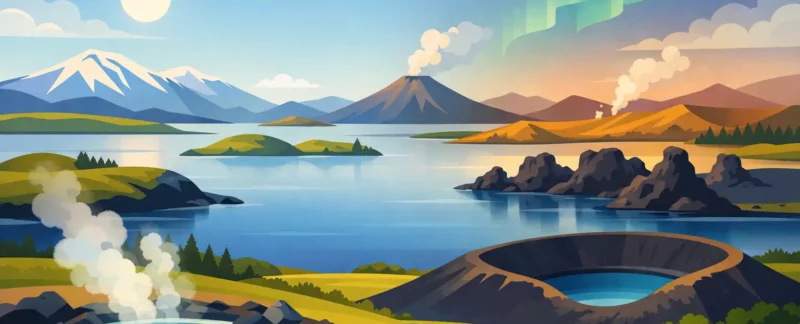
In the Lake Mývatn region and other rural parts of the north, darkness is often easy to find. The harder part is finding the right combination of clear sky, safe access, and shelter from wind. That is where local knowledge has real value. A place that looks perfect on a summer afternoon may be exposed, snowed in, or difficult to reach on a January night.
Iceland stargazing tour review: the parts that matter most
When deciding whether a tour is worthwhile, look beyond dramatic photographs. Long-exposure images can show far more color and detail than the human eye sees in a single glance. That does not make the experience less special, but it does help to arrive with realistic expectations.
Dark skies are only part of the picture
Distance from city lights helps, but darkness alone does not guarantee good stargazing. Low cloud, haze, blowing snow, fog, and a bright moon can all reduce what is visible. A clear, moonless night is ideal for faint stars and the Milky Way. A bright moon can still create a beautiful landscape, especially with snow on the ground, but it washes out fainter objects.
For many visitors, simply seeing the night sky without urban light pollution is striking. Familiar constellations look sharper, and the number of visible stars can be surprising. On a particularly clear night, you may see the band of the Milky Way, star clusters, satellites moving steadily overhead, and occasional shooting stars.
Flexibility is more valuable than a fixed route
A stargazing tour should respond to the forecast rather than follow a rigid plan. Conditions can differ considerably within a short drive. One valley may be under cloud while another has a clear opening. Wind direction can also determine whether a stop feels exciting or simply too cold to enjoy.
This is one reason a private tour suits couples, families, photographers, and travelers with specific needs. The pace can be adjusted. Perhaps you would like a quiet location and time to learn the constellations. Perhaps you need easier access with minimal walking. Perhaps photography is the priority, and you are happy to wait for a break in the sky. Those are different evenings, and they should not be treated as the same tour.
A knowledgeable guide changes the experience
There is more to a dark sky than pointing upward. A local guide can explain why Iceland’s winter light changes so quickly, how moon phase affects visibility, and why the weather forecast is only one part of the decision. They can also share the practical side of being outdoors in Iceland after dark: where footing may be uneven, how quickly wind chill builds, and when it is smarter to leave a location than to stay.
I was born and raised near Lake Mývatn, and I have learned that the most rewarding nights are often the ones approached with a little humility. Iceland does not perform on command. But when the clouds part over a quiet landscape, it is difficult to find a better reminder to slow down.
Stargazing versus Northern Lights tours
These experiences overlap, but they are not identical. A Northern Lights tour is centered on seeing aurora activity. Stargazing is centered on the stars, planets, moon, and the wider night sky. A clear night with no aurora can still be an excellent stargazing night. Conversely, an aurora display can be visible even when the stars are partly hidden by thin cloud.
If the Northern Lights are your main goal, flexibility is especially important. Solar activity cannot be scheduled, and clear skies may be available only for a short window. If you enjoy the whole night-sky experience, not just one photograph, a stargazing-focused evening can feel more satisfying when aurora conditions are quiet.
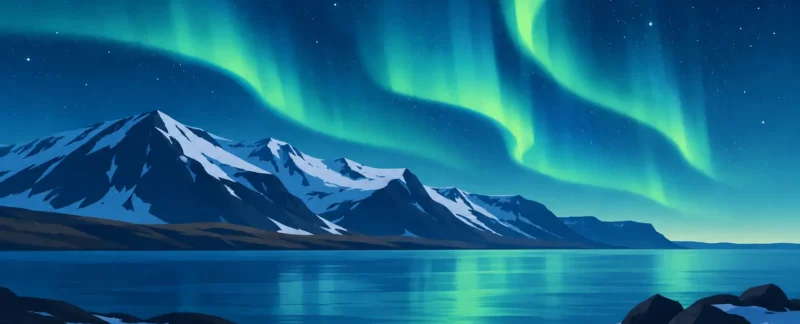
The ideal approach is to treat the Northern Lights as a possibility rather than a promise. You are heading into the dark to meet Iceland on its own terms. That may mean a green arc on the horizon, a sky full of stars, or a calm winter landscape under moonlight.
Who will enjoy a private stargazing outing?
A private tour is especially useful for travelers who want reassurance after dark. This includes visitors unfamiliar with winter driving, families who need a gentler pace, and older travelers who would prefer to avoid standing for long periods in exposed conditions. It also works well for photographers who want help choosing a location and setting up without the pressure of a large group moving on.
It is not automatically the right choice for everyone. If your only objective is to check the Northern Lights off a list and you are comfortable driving in winter conditions, you may prefer to watch forecasts and explore independently. But self-driving requires attention, patience, warm gear, and a willingness to turn back when conditions change. Roads in the north can be completely manageable one evening and poor the next.
For guests who value local stories as much as a dark horizon, a guided night can add another layer. The landscape does not become less interesting after sunset. Lava formations take on different shapes, snow reflects moonlight, and familiar places feel unexpectedly quiet.
What to wear and bring
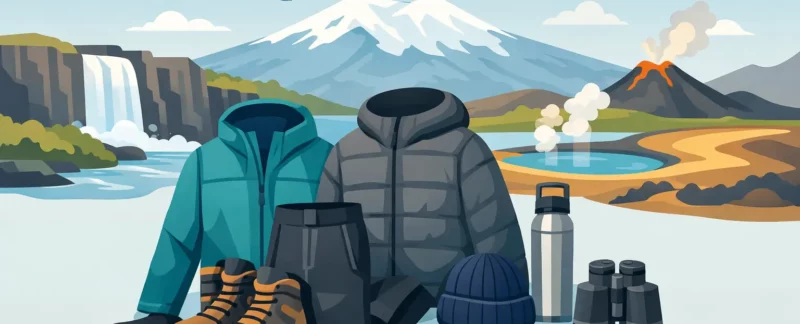
Cold is usually the deciding factor in how long people enjoy being outside. Dress for standing still, not for walking from a warm hotel to a restaurant. A warm insulated coat, thermal base layers, hat, gloves, sturdy footwear, and warm socks make a bigger difference than almost any piece of camera equipment.
Bring your camera if photography matters to you, but do not let it take over the evening. A tripod is helpful for night images, and a phone can capture a nice memory in the right conditions, though it will not always reproduce what you see. Keep spare batteries warm in an inside pocket, since cold drains them quickly.
Avoid using a bright white flashlight once you arrive at a viewing spot. Your eyes need time to adjust, often 20 minutes or more. A dim red light is kinder to everyone’s night vision. Most importantly, give yourself permission to put the camera down for a few minutes. The sky is not improved by viewing it only through a screen.
The honest verdict
A stargazing tour in Iceland is worth it when the expectation is not perfection, but possibility. The value lies in having someone make careful choices about timing, location, safety, and comfort while you focus on the experience itself.
Choose a tour that is candid about weather, willing to adapt, and built around the people traveling rather than a fixed schedule. Then bring warm layers, a little patience, and enough time to let your eyes adjust. On a clear northern night, that is often all the preparation a remarkable sky asks of you.