
Askja is not the place to improvise at 8 a.m. with half a tank of gas and a weather app you checked the night before. If you are wondering about the best way to visit Askja, the real answer starts with one simple fact: this is one of Iceland’s most remote and demanding destinations, and getting there well matters as much as arriving.
That is part of why Askja feels so special. The road into the highlands changes the pace completely. Traffic drops away, phone signal becomes unreliable, and the landscape starts to look stripped down to lava, sand, distance, and sky. By the time you reach the caldera area, you have not just driven to a site on a map. You have crossed into a part of Iceland that still asks for respect.
The best way to visit Askja depends on your trip style
There is no single right answer for every traveler. The best way to visit Askja depends on your comfort with rough roads, your experience driving in Iceland, how much time you have, and whether the journey itself sounds exciting or stressful.
If you are confident with long days, prepared for Highland conditions, and traveling in the right season with the right vehicle, a self-drive trip can work well. It gives you flexibility and a sense of independence. But Askja is not a casual day out in a standard rental car. Even in summer, access depends on road conditions, and Highland roads can be rough, slow, and tiring.
For many visitors, especially couples, families, photographers, and travelers who want to enjoy the landscape without worrying about the route, a private guided day tour is the better fit. You trade the pressure of navigating remote roads for the chance to actually look out the window, ask questions, stop when the light is good, and move at a pace that suits your group.
That is the trade-off in plain terms: freedom versus ease. Some travelers love handling everything themselves. Others would rather spend the day experiencing Askja than managing it.
Why Askja is different from other Iceland day trips
Askja sits deep in the Icelandic Highlands, in a volcanic landscape that feels isolated even by Icelandic standards. The route is long, the roads are rough, and the season is limited. This is not like driving the Ring Road and adding a scenic detour.
Road access usually opens only in summer, and exact timing varies from year to year. Snowmelt, river levels, and road conditions all matter. A route that is possible one week may not be advisable the next. That uncertainty is normal in the Highlands, but it catches people off guard if they are used to more predictable travel.
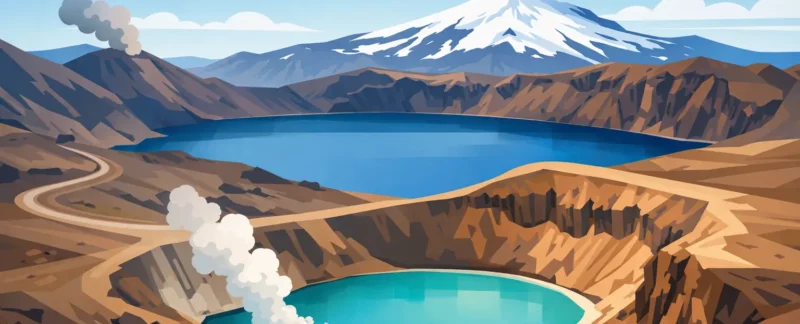
Then there is the final approach. Reaching the parking area is one thing. From there, most visitors walk to the crater area and the geothermal lake Víti. The walk is manageable for many people, but it is still part of the day and should not be treated as an afterthought. Wind, uneven ground, and changing weather can make a simple walk feel longer than expected.
Driving yourself to Askja
Self-driving can be rewarding if you know what you are signing up for. It suits travelers who enjoy remote driving, understand Icelandic road rules, and are comfortable with Highland conditions. You need a proper 4×4, enough fuel, food, water, warm layers, and a realistic view of how long the day will be.
The biggest mistake is assuming that distance on the map tells the whole story. Highland driving is often slow. Roads can be corrugated, rocky, or muddy, and conditions can change over the course of a single day. Driver fatigue is a real factor. Even if the weather is good, concentrating for hours on rough roads takes energy.
The other issue is confidence. Some people are perfectly capable drivers at home and still find Iceland’s Highland roads stressful. That is not a failure. It is just a different kind of driving. If you spend the whole day tense behind the wheel, Askja may feel more like a test than an experience.
If you do choose to drive, start early, check official road and weather conditions the same day, and keep your plan conservative. In the Highlands, good judgment matters more than optimism.
Visiting Askja with a guide
For many travelers, this is the most comfortable and sensible option. A guided trip removes the hardest part of the day: route planning, road decisions, and vehicle handling in remote terrain. That leaves more room for what people actually came for – the geology, the silence, the color of the mountains, the scale of the caldera, and the feeling of being far from everything.
A good local guide also adds context that is easy to miss on your own. Askja is not only dramatic to look at. It is one of Iceland’s most significant volcanic areas, shaped by eruptions, shifting ground, and a landscape that still feels active. Knowing what you are seeing changes the experience. Lava fields stop being just black rock. Caldera edges become part of a larger story. Even the emptiness starts to make more sense.
There is also a practical advantage that matters more than many people expect: flexibility. On a private tour, the day can be shaped around your group. That may mean adjusting stops for photography, pacing the walk more gently, or making space for people who simply want a calmer day. For older travelers or families, that flexibility often makes the difference between a trip that feels rushed and one that feels genuinely enjoyable.
When to go to Askja
Summer is the season. That sounds obvious, but in Askja’s case it is essential. Access typically depends on Highland roads opening, and that happens only after winter conditions have eased enough for safe travel. Even then, summer in the Highlands is not the same as summer in town. Temperatures can be low, wind can be strong, and weather can shift quickly.
July and August are usually the most reliable months for access, but reliability does not mean certainty. If Askja is high on your list, keep your itinerary flexible where possible. Giving yourself a buffer day can help if roads or weather force a change.
Early season trips can be beautiful because the landscape still holds traces of winter, but they can also be more uncertain. Late summer often brings easier conditions, though weather can still turn fast. There is no perfect week that guarantees everything. That is part of Highland travel.
What to wear and bring
People often focus on the vehicle and forget about personal comfort. Askja is a long day in an exposed place. Dress for wind and temperature swings, not just for the forecast you saw at breakfast.
A waterproof outer layer, sturdy shoes or hiking boots, warm mid-layers, and gloves are all sensible. Bring water and snacks even if you do not expect to need much. If you are visiting for photography, pack for patience. Highland light can be beautiful, but it rarely performs on command.
And if you plan to swim in Víti when conditions allow, remember that it is not always possible or advisable. Conditions change, access can be restricted, and what people see in older photos does not always match current reality. It is better to treat that as a bonus, not the goal of the day.
Is Askja worth the effort?
Yes, for the right traveler. Askja is worth it if you want to see a part of Iceland that feels remote, raw, and geologically alive. It is especially memorable for people who enjoy volcanic landscapes, big open spaces, and destinations that still require a bit of intention.
It may be less appealing if you dislike long travel days, want easy roadside sightseeing, or are trying to pack too much into a short itinerary. Askja is not a quick add-on. It asks for time, energy, and some flexibility.
That is exactly why many people remember it so clearly. The remoteness is not an inconvenience attached to the place. It is part of the place.
So what is the best way to visit Askja?
If you are highly confident on rough Highland roads and want full independence, self-driving can be a good choice in the right conditions. But for most visitors, the best way to visit Askja is with an experienced local guide who knows the roads, the weather patterns, and how to shape the day around the people in the vehicle.
That approach is not about doing less. It is about noticing more. You can spend less attention on logistics and more on where you are, which in Askja matters a great deal. For travelers staying in North Iceland and looking for a day that feels personal, safe, and grounded in local knowledge, that tends to be the difference between simply reaching Askja and really experiencing it.
If Askja is calling to you, give it the kind of planning it deserves. Remote places are often the ones that stay with you longest.
