
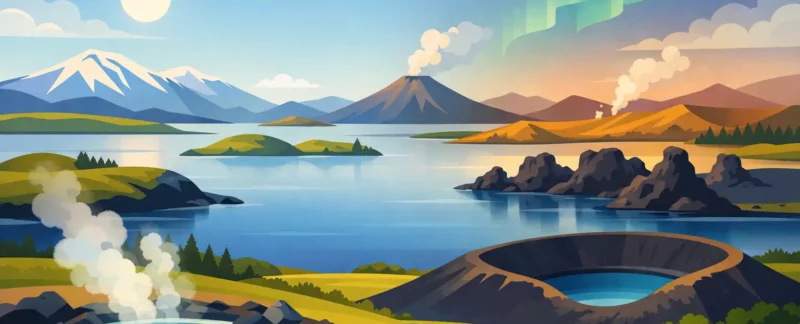
Lake Mývatn changes character more dramatically than many visitors expect. A bright July evening can feel almost endless beside the pseudocraters, while a February morning may bring snow, steam, low golden light, and a completely different sense of scale. If you are deciding when to visit Lake Myvatn, the honest local answer is that every season has something special – but each asks you to travel a little differently.
The best time depends on what you hope to experience. Summer is easiest for access and long days outdoors. Winter is best for snowy landscapes, geothermal contrast, and the possibility of Northern Lights. Spring and fall offer quieter roads, shifting colors, and more room to slow down. For a private day tour, that flexibility matters: the right route on a windy October day is not necessarily the right route on a calm June afternoon.
Summer: Long Light and the Full Mývatn Landscape
From June through August, Lake Mývatn is at its most accessible. Roads are generally clear, hiking trails are open, and the long daylight hours make it possible to see a great deal without feeling rushed. This is the season for combining the lake, Dimmuborgir lava formations, Hverir geothermal area, Krafla, waterfalls, and quieter corners that would be difficult or inaccessible in winter.
June brings the magic of the midnight sun. It never really gets dark, and the soft evening light can be wonderful for photography. The landscape is turning green, birds are active around the lake, and travelers who enjoy walking will have plenty of options. You do not need to start extremely early or race a sunset that never quite arrives.
July and early August are usually the warmest and most dependable months for a first visit. They are also the busiest. Mývatn is large enough that a local guide can help you find a more peaceful rhythm, but famous stops may still have plenty of visitors during the middle of the day. Starting at a time that suits the light, weather, and your interests can make a noticeable difference.
There is one practical summer issue worth mentioning: midges. The lake is famous for them, and their numbers vary with wind, warmth, and location. They are harmless, but on still days they can be enthusiastic company. A head net is a simple and sensible thing to bring, especially if you plan to spend time near the water. Do not let them put you off. With the right preparation and a flexible plan, summer remains a beautiful time to be here.
Who summer suits best
Summer is a strong choice for families, first-time Iceland visitors, birdwatchers, hikers, and anyone who wants maximum daylight with fewer weather-related complications. It is also the best season for reaching highland destinations such as Askja, when road and conditions allow. That said, highland travel is never something to assume is available simply because it is summer. Snow, river conditions, and road openings set the schedule, not the calendar.
Fall: Color, Space, and Changeable Weather
September and October can be a lovely answer to the question of when to visit Lake Myvatn. The summer crowds begin to ease, the low vegetation takes on rich yellow, red, and copper tones, and the light becomes softer. On a clear day, the area can look remarkably calm and spacious.
Fall also brings more uncertainty. A sunny morning can give way to rain, wind, fog, or the first snow of the season. This is normal North Iceland weather, not bad planning. The key is to avoid building a rigid schedule around one viewpoint or one hike. A good day in fall may include a warm stop near a geothermal area, a waterfall in dramatic weather, and a short walk when the clouds lift.
By late September, nights are dark enough for Northern Lights. Seeing them is never guaranteed, since clear skies and solar activity both matter, but fall gives visitors a chance to pair daytime sightseeing with an evening out. For travelers staying several nights in the area, that is often a more relaxed approach than trying to fit everything into one packed day.
Fall is especially rewarding for photographers. You have more usable hours around sunrise and sunset than in high summer, fewer people at many locations, and weather that can add real mood to the landscape. Bring layers and be willing to change plans. A little flexibility is often what turns a gray forecast into your favorite day of the trip.
Winter: Snow, Steam, and Northern Lights
Winter at Lake Mývatn is striking. Snow settles around black lava fields. Steam rises from Hverir and the geothermal power area. Frozen edges form along the lake, and the low sun can paint the landscape in pink, gold, and blue. It is a quieter season, and for many visitors it feels like the Iceland they had imagined.
The trade-off is daylight and road conditions. From roughly November through January, daylight is limited, especially near the winter solstice. You can still have a full and rewarding day, but it needs to be planned realistically. Winter sightseeing is less about checking off a long list and more about choosing a few places well, allowing time for safe driving, warm breaks, and changing conditions.
Roads around the main Mývatn area are often maintained, but weather can affect travel quickly. Strong winds, drifting snow, ice, and poor visibility are all possible. This is one reason private guiding can be particularly useful in winter. Instead of spending your vacation watching forecasts and worrying about unfamiliar roads, you can focus on the landscape while someone who knows the area assesses the day as it develops.
February and March often offer an appealing balance. There is more daylight than midwinter, winter conditions are still very much present, and Northern Lights remain possible. March can feel especially generous, with crisp snowy scenery and enough light for a more varied day tour. If you want both winter atmosphere and practical sightseeing time, these months deserve serious consideration.
Winter is not only for Northern Lights
Many travelers plan a winter visit around the aurora, which is understandable. But the daytime landscape is reason enough to come. Northern Lights are a natural phenomenon, not an appointment. Treat them as a possible bonus, then enjoy the lava, waterfalls, geothermal areas, history, and quiet winter roads for what they are.
Spring: The Quiet Season With a Few Surprises
April and May are often overlooked, which is part of their appeal. Snow may still cover parts of the region in April, while lower ground begins to show brown, gold, and green. By May, daylight has returned in a big way, migratory birds are arriving, and the lake begins to wake up.
Spring is a season of transition. Some winter conditions can linger, while some summer activities and roads may not yet be available. The weather can be wonderfully clear one day and thoroughly wintry the next. If your dream trip depends on hiking every trail or reaching the remote highlands, wait for later in the season. If you enjoy changing landscapes and fewer visitors, spring can be deeply rewarding.
It is also a good time for travelers who value a slower pace. There is no need to force a grand expedition every day. A carefully planned route around Mývatn can reveal a great deal: volcanic ground, geothermal activity, local stories, birdlife, and the small details that are easy to miss when traveling on a tight schedule.
Choosing Your Month by Travel Style
If easy travel, hiking, and almost endless light are your priorities, choose June through August. If you want autumn color, quieter stops, and a chance of Northern Lights, look toward September or early October. For snow-covered landscapes and winter photography, February and March are often the most balanced choices. April and May suit visitors who are happy to embrace a little unpredictability in exchange for quiet and seasonal change.
Your comfort with weather matters as much as the month itself. Iceland does not always follow the tidy rules of a calendar. A windy summer day can feel colder than expected, while a calm winter day can be beautifully clear. Packing warm layers, waterproof outer clothing, sturdy shoes, and patience will serve you well in every season.
A local guide can shape the day around the conditions rather than a fixed bus timetable. Kristinn at Kip was born and raised near Lake Mývatn, and that local knowledge is useful when weather, road conditions, light, or your own interests call for a different plan. Some guests want the classic highlights; others would rather spend longer with a camera, take gentler walks, or hear more about the geology and life in the area.
Whenever you come, leave a little room in your itinerary for the unexpected. Lake Mývatn is at its best when you can stop for a sudden break in the clouds, watch steam drift across the volcanic ground, or take the longer way because the view is simply worth it.