
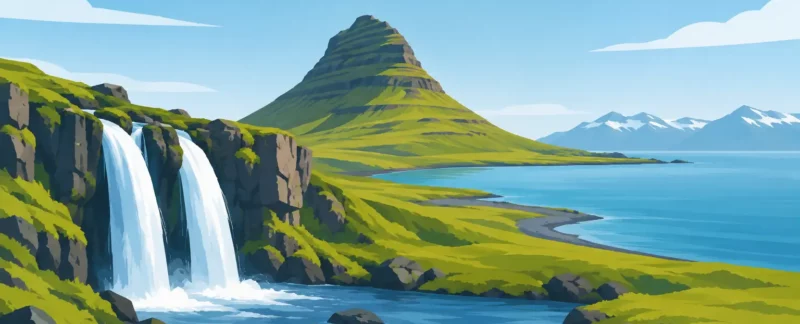
A good Iceland photo itinerary example is not a race from one famous viewpoint to the next. In North Iceland, the best images often come from allowing time for weather, changing light, a short walk, and the unexpected moment when a cloud opens over a waterfall. This sample day is built for travelers staying around Lake Mývatn who want volcanic landscapes, powerful water, and room to work rather than a packed bus-tour schedule.
A Flexible Iceland Photo Itinerary Example
This route follows part of the Diamond Circle, beginning near Lake Mývatn and heading northeast toward Dettifoss and Ásbyrgi. It works especially well from late spring through early fall, when highland and gravel-road access is more predictable. In winter, the same places may require a very different plan due to snow, road conditions, and limited daylight.
The route is deliberately flexible. A clear morning may be best spent at open volcanic scenery, while a wet, dramatic afternoon can make Dettifoss more powerful in photographs. Iceland does not always follow the schedule on your phone, so the itinerary should not be treated as a fixed checklist.
Early morning: Lake Mývatn and Hverfjall
Start early around Lake Mývatn, ideally before other visitors arrive. The lake has a quiet, open character that photographs beautifully in low light, especially when there is mist over the water or fresh snow on the surrounding lava fields. In summer, the soft nighttime light can last for hours, so an early start does not always mean getting up in complete darkness.
Hverfjall, the large black tephra crater near the lake, is a strong first stop when the weather is clear enough for wide views. The scene is almost monochrome: dark volcanic ground, distant mountains, and a huge circular crater rim. It is a place where a wide lens can show scale, but a longer lens is useful too. Small figures walking the trail can give the landscape a sense of size.
Wind is common here. Bring a cloth for your lens, keep spare batteries warm in a pocket during colder months, and secure hats and loose camera straps before walking uphill. The crater is not difficult in good conditions, but it is exposed, and the light can change quickly.
Midmorning: Dimmuborgir or Hverir, depending on the sky
From Hverfjall, choose between two very different volcanic subjects. Dimmuborgir offers twisted lava formations, narrow paths, and a more intimate style of photography. It is especially worthwhile when clouds soften the sky, because the lava itself becomes the main subject. Look for framing opportunities through arches and irregular rock shapes rather than trying to photograph every formation from the same height.
If the sky has opened and the sun is breaking through, Hverir geothermal area may be the better choice. Its steaming vents, bubbling mud pots, ochre earth, and sulfur-stained ground offer dramatic color and texture. Steam can hide the background one minute and reveal it the next, which is exactly why it pays to stay longer than a quick roadside stop.
At Hverir, follow marked paths and respect closures. The ground is active, fragile, and often much hotter than it looks. A photograph is never worth stepping outside a safe area. The smell can be strong, particularly on still days, but most visitors find it part of the memory of the place.
Afternoon: Dettifoss and Selfoss
After a relaxed lunch and a weather check, continue toward Dettifoss. This is often the centerpiece of a North Iceland photography day. Dettifoss is not a delicate waterfall. It is loud, forceful, and full of spray, with gray glacial water dropping into a deep canyon. On overcast days, the scene can feel almost black and white. When the sun appears at the right angle, rainbows sometimes form in the mist.
Bring a rain cover for your camera, or at least a simple protective layer and several clean microfiber cloths. Spray can reach viewing areas depending on the wind. If you want a longer exposure, be prepared to clean the lens repeatedly. A tripod is useful, but it is not essential. Handheld shutter-speed experiments can capture the texture and violence of the water just as well.
Selfoss, a shorter walk away, is quieter in character. Its broad line of smaller falls and basalt edges makes it a good contrast to Dettifoss. Many people photograph only the main waterfall and leave, but Selfoss rewards patience. Walk along the canyon, look back toward the falling water, and use the riverbank shapes to lead the eye through the frame.
Road access to the waterfall area varies by season. Some routes are rougher than visitors expect, and conditions can change after heavy rain, snow, or high winds. This is one reason a private guided photo day can be valuable: the route can be adjusted before a long drive leads to a closed road or poor visibility.
Late afternoon: Ásbyrgi Canyon
Continue north to Ásbyrgi, a horseshoe-shaped canyon with high cliffs, birch woodland, and a very different atmosphere from the open volcanic country around Mývatn. After the wide, raw views at Dettifoss, Ásbyrgi gives you quieter subjects: forest paths, cliff textures, still water, and changing layers of green or autumn color.
The canyon is linked to local folklore as well as dramatic glacial-flood geology. That combination is typical of North Iceland. A place can be explained by science and still carry stories that local people have told for generations. For photography, this means looking beyond the obvious viewpoint. A close study of moss, tree bark, rock faces, or reflections can say as much about the place as a wide landscape image.
If time and light allow, finish near the coast around Öxarfjörður. Low evening light can bring shape to the distant mountains and color to the wetlands. It is also a good moment to slow down. A long day of landscape photography can make every scene look urgent, but the final photographs are often better when you choose one subject and wait for it.
How to Adapt This Route for Your Travel Style
Couples and independent travelers often prefer a later start and fewer stops, with more time at Dettifoss or Hverir. Families may choose shorter walks and add more breaks. Serious photographers may want to plan around sunrise, sunset, moonlight, or the Northern Lights instead of a standard daytime schedule.
The season makes an even bigger difference. Summer brings long daylight hours, greener landscapes, and easier access to remote areas. Autumn can provide rich color and lower sun angles. Winter is beautiful but demands realistic expectations: daylight is short, roads may be difficult, and a single weather system can reshape the day. Spring can be muddy and changeable, while some mountain roads remain closed well into the season.
For a photo-focused day, pack layers rather than one heavy coat, waterproof outerwear, sturdy shoes, spare batteries, memory cards, and a small towel or cloth for camera gear. A neutral-density filter and tripod are useful for waterfalls, but do not let equipment keep you from responding to the light. Iceland frequently gives you rain, wind, sun, and mist in the same hour.
Why a Local Guide Changes the Day
A private photo itinerary is not about being driven from landmark to landmark. It is about making good decisions while conditions are changing. A local guide can suggest whether the best light is likely to be at the lake, the coast, a canyon, or a geothermal field, and can shift the order when weather makes the original plan less promising.
Kristinn at Kip was raised near Lake Mývatn and knows that a successful day here is rarely about following a rigid route. It may mean taking the quieter road, waiting out a shower, stopping for a view that is not on the original plan, or choosing safety over a difficult road. That local judgment leaves guests free to watch the landscape and concentrate on their photographs.
Bring curiosity, dress for the wind, and leave enough room in your schedule for the light to surprise you. North Iceland is at its best when you give it time.
