
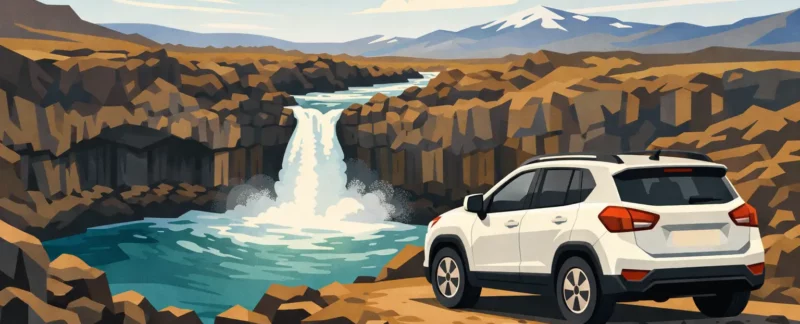
Aldeyjarfoss is not the kind of waterfall you happen upon between a café stop and a souvenir shop. It sits where the highlands begin to make themselves felt: a powerful white curtain of water dropping into a dark basalt gorge, with broad open country all around. Knowing how to reach Aldeyjarfoss makes the difference between a relaxed, memorable detour and a day spent second-guessing gravel roads, weather, and your rental car.
The good news is that it is very possible to visit independently in the right conditions. The honest answer, though, is that the route changes character with the season. In summer, the drive is a rewarding back-road excursion from the Lake Mývatn area, Laugar, or Akureyri. Outside the main summer season, access can be limited, icy, or simply not sensible in a standard rental vehicle.
How to reach Aldeyjarfoss by car
Most visitors approach Aldeyjarfoss from the north via Road 842, the east-side road through Bárðardalur. From the Ring Road near the Goðafoss area, you turn south into the valley and follow the road toward the highland edge. The final section is generally gravel, and the parking area for the waterfall is reached by a short side route near the end of the public road network.
From Akureyri, allow roughly two hours each way once you include the slower gravel section and normal sightseeing stops. From Laugar, the drive is shorter, while travelers based around Mývatn should usually plan on a full-day loop rather than treating Aldeyjarfoss as a quick stop. Driving times depend far more on road surface, visibility, and your confidence on gravel than they do on the number of miles shown on a map.
Do not rely only on a navigation app. Use it for orientation, but check the current road information on the day of travel and pay attention to signs once you are in Bárðardalur. Maps sometimes suggest routes across roads that are seasonal, closed, or unsuitable for the vehicle you have rented. A route that looks direct on a screen can involve a rough mountain road or a road closure farther south.
There is also a highland approach from the south via F26, often called the Sprengisandur route. This is not the normal choice for a simple waterfall visit. F-roads are mountain roads, open only seasonally, and require a proper four-wheel-drive vehicle. They may include rough surfaces, unbridged rivers, and long stretches without services. If Aldeyjarfoss is your main destination, the northern approach is usually the practical one.
Choose the vehicle for the conditions
In dry summer weather, many visitors can reach the Aldeyjarfoss parking area in a regular rental car. That does not mean the road will feel like a paved highway. Expect loose gravel, washboard ridges, dust, blind bends, and occasional potholes. Drive slowly enough to stay comfortable and to protect both your tires and the underside of the car.
A larger vehicle with decent clearance can make the day more comfortable, especially after rain or when the road surface has been recently graded. Four-wheel drive is not automatically necessary for the standard northern approach when roads are open and dry, but it can be a sensible choice for travelers who want to continue into highland areas where conditions allow. The key point is simple: do not take a two-wheel-drive rental onto an F-road, even if the road initially looks harmless.
Before leaving pavement, make sure you have enough fuel. There are no services at Aldeyjarfoss, and mobile reception can be unreliable as you travel farther into the valley. Bring drinking water, warm layers, food for the drive, and a charged phone. In North Iceland, a clear morning can turn into wind, rain, or low cloud surprisingly quickly.
When is the best time to go?
Late spring through early fall is the normal visiting window, but conditions matter more than the calendar. Summer gives you the best chance of open roads, long daylight, and manageable driving. July and August are usually the easiest months for visitors who are unfamiliar with Icelandic gravel roads.
September can be beautiful, with lower sun and autumn color beginning in the valley, but daylight is shorter and weather can become more changeable. In winter, the route may be snowy, icy, closed, or inaccessible. Even if the first part of the valley road appears passable, the final approach can be very different. Never assume that reaching the region means you can safely reach the waterfall.
Wind is worth taking seriously here. Aldeyjarfoss is exposed, and a strong wind can make car doors difficult to manage and the walk to the viewpoint unpleasant. If visibility is poor or a storm is forecast, changing the plan is good judgment, not a missed opportunity. There are plenty of remarkable places in the region that work better on a difficult weather day.
The walk from the parking area
From the parking area, Aldeyjarfoss is reached on foot over uneven ground. The walk is short, but this is not a polished urban trail. Wear sturdy shoes with grip rather than smooth-soled sneakers, particularly after rain. The ground can be loose, muddy, or slippery near the gorge.
The basalt columns around the waterfall are a large part of what makes the place special. They form dark geometric walls beside the pale, glacial water of Skjálfandafljót. Take your time, especially if you are photographing the falls. A wide view shows the scale of the canyon, while a longer lens can pick out the contrast between white water and black rock.
Stay back from edges and respect any barriers or marked paths. The rock can be unstable, and wet moss or loose gravel is more dangerous than it looks in photographs. This is a place to enjoy without rushing. The best viewpoint is not worth a risky step closer.
Make Aldeyjarfoss part of a good North Iceland day
Aldeyjarfoss works especially well for travelers who enjoy quiet scenery and do not mind a slower road. It can be paired with Goðafoss, the Bárðardalur valley, or other stops around the Diamond Circle, depending on your starting point and the day’s conditions. It is less suitable as an ambitious add-on to a packed itinerary with fixed dinner reservations or a long evening drive back.
Give the waterfall room in the schedule. A rushed visit often means driving gravel too fast, skipping road checks, or arriving when light and weather have changed. For photographers, the softer light of morning or later afternoon can be especially rewarding, although cloud cover often suits the waterfall well by reducing contrast.
If you would rather spend the day looking out the window than studying road surfaces, a private local guide can be a very comfortable option. With Kip, the route can be adapted to the weather, your interests, and how much walking you want to do, with the added benefit of local context for the valley and its geology.
Aldeyjarfoss rewards a little preparation. Check the roads, take the slower pace seriously, and leave enough time to stand beside the gorge without watching the clock. That is when this remote waterfall feels less like a pin on a map and more like one of North Iceland’s truly memorable places.
