
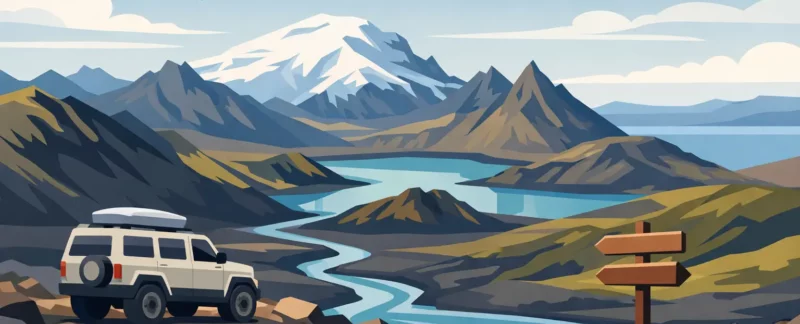
The road to Askja can begin under a blue northern sky and end beside snowbanks, black sand, and wind strong enough to make a warm jacket feel very sensible. That contrast is exactly why guided highland options are worth considering. The Icelandic Highlands are not a place where a map, a rental car, and optimism always make a good plan.
For many visitors, the question is not whether the Highlands are beautiful. They are. The useful question is which kind of Highland day fits your travel dates, comfort level, interests, and the conditions on the ground. A private guided trip gives you room to answer that question properly rather than squeezing into a fixed itinerary.
What Counts as a Highland Tour?
In North Iceland, a Highland tour usually means traveling beyond the paved main roads into remote interior landscapes. These areas may include gravel routes, rough mountain tracks, wide open lava fields, high desert, river crossings, and places with no services for many miles. The scenery is extraordinary, but it asks for preparation and a vehicle suited to the route.
Askja is the best-known Highland destination in this part of Iceland. Its volcanic caldera, the deep blue waters of Öskjuvatn, and the geothermal crater at Víti feel far removed from the farms and fishing towns along the coast. Reaching it is a full-day experience, not a quick stop between breakfast and dinner.
Other routes can lead toward quieter valleys, old mountain tracks, waterfall country, or less-visited parts of the northeast. The right choice depends on what you hope to take home from the day: volcanic geology, wide landscapes, photographs, a sense of remoteness, or simply the pleasure of letting someone else handle the driving.
Guided Highland Options for Different Travelers
Askja for the classic interior experience
An Askja day tour suits travelers who want to see one of Iceland’s most dramatic volcanic landscapes and are comfortable with a long, active day. The journey itself is part of the experience. As the road climbs into the interior, the green fields fade away and the land becomes broader, darker, and more exposed.
There is usually a walk at Askja, and conditions can change quickly. Snow may remain well into the summer near the caldera, while fog and wind can affect visibility at any time. A private guide can set a comfortable pace, explain what you are seeing, and adjust the day when the weather has other ideas.
This option is especially good for couples, families with older children, and visitors who would rather spend their energy looking out the window than worrying about road surfaces or navigation. It is also a strong choice for anyone interested in Iceland’s active geology without wanting a technical hiking expedition.
A quieter route for travelers who dislike crowds
Not every Highland day needs to focus on the most famous destination. Some guests prefer a route with fewer people, shorter walks, or more time to stop for photographs and stories. A flexible private outing can place more emphasis on valleys, waterfalls, lava formations, historic routes, or the changing light across the interior.
This is often the better fit for repeat visitors, photographers, or travelers who have already seen major attractions and want something less predictable. It can also work well for older travelers or families who want the feeling of going off the main road without committing to the longest possible day.
The trade-off is simple: a quieter route may not have one famous postcard view to name afterward. What it can offer is space, time, and a more personal experience of the landscape.
A photography-focused Highland day
The Highlands reward patience. Low clouds may soften a mountain ridge, rain can bring out the color of moss and volcanic gravel, and late-day light can make a black desert look almost silver. A photography-oriented trip is less about checking stops off a list and more about being in the right place when the conditions become interesting.
That means the plan needs flexibility. If the light is beautiful in one valley, it may be wiser to stay there than to rush toward the next scheduled stop. If clouds close over a high viewpoint, a guide who knows the surrounding area can suggest another angle, a sheltered location, or a worthwhile change of plan.
You do not need to be an expert photographer for this kind of day. It also works for travelers who simply want time to enjoy a view without hearing, “We have five minutes here.”
Why a Private Guide Makes a Real Difference
Highland travel is not only about having a capable vehicle. It is about judgment. Road openings, weather forecasts, river levels, snow, wind, and visibility all matter. A route that is reasonable one morning can be unsuitable later in the day.
A certified local guide brings practical decision-making to the trip. That includes knowing when a road is not worth attempting, when a walk should be shortened, and when an unexpected detour is actually the best part of the day. There is no prize for sticking to a plan that no longer makes sense.
At Kip, trips are led with that local perspective in mind. Kristinn grew up near Lake Mývatn, and the value of that background is not a rehearsed speech. It is knowing how the weather moves through the region, which routes make sense from your base, and where a small change in direction can improve the day.
Private guiding also removes a common source of stress for visitors: the feeling that they must keep up. Your group can take breaks when needed, move at a pace that feels comfortable, and spend more time at the places that genuinely interest you. This matters for families, travelers with mobility considerations, and anyone who prefers a calmer day than a large coach tour can provide.
Timing Matters More Than Most People Expect
The Highland season is short and never follows an exact calendar. Many interior roads open only after winter snow has melted and the ground can handle traffic. Opening dates vary from year to year, and some routes may close temporarily because of weather or changing conditions.
Summer is the usual season for Askja and similar interior routes, but even then, warm layers, waterproof outerwear, sturdy walking shoes, water, and snacks are sensible. The temperature at a high-elevation stop can feel very different from the temperature where you began the morning.
Outside the main Highland season, a different northern itinerary may be a better use of your day. Lake Mývatn, the Diamond Circle, coastal landscapes, waterfalls, and winter Northern Lights outings all offer plenty of character without forcing a Highland plan at the wrong time of year. Flexibility is not settling for less. In Iceland, it is often how you get the better story.
Choosing the Right Option Before You Book
Start with a few honest questions. How much driving are you comfortable with in one day? Do you enjoy walking on uneven ground? Are you hoping for a famous location, a quieter landscape, or time to take photos? And are you willing to let weather and road conditions shape the final route?
Share those answers with your guide before the trip. Good planning does not mean every minute is fixed. It means the day has a clear purpose, the vehicle and route match the group, and there is a sensible alternative if conditions change.
The most memorable Highland days rarely come from pushing ahead at all costs. They come from reading the land well, leaving room for the unexpected, and having someone beside you who knows when a rough road leads somewhere wonderful – and when it is wiser to turn toward another equally remarkable view.