
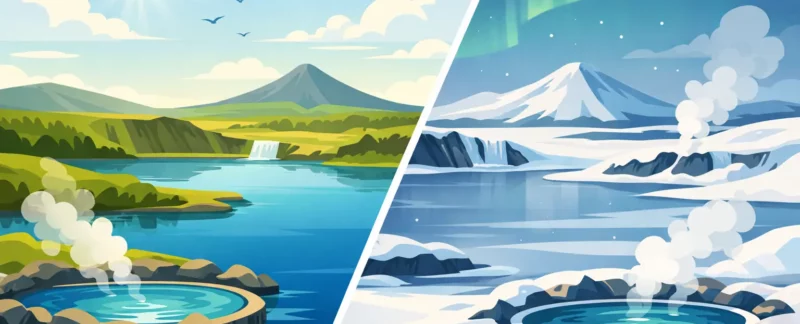
Lake Mývatn changes character so completely with the season that summer vs winter Myvatn is not simply a question of weather. It is a choice between two very different ways of experiencing North Iceland. In summer, the lake is alive with birds, green growth, and near-endless light. In winter, snow softens the lava fields, steam rises more sharply from the earth, and darkness creates a real chance to see the Northern Lights.
Neither season is automatically better. The right choice depends on what you hope to see, how comfortable you are with changing road conditions, and whether you prefer long days outdoors or a quieter, more atmospheric landscape.
Summer vs Winter Myvatn: The Biggest Differences
Summer in the Mývatn area generally means open roads, flexible days, and easy access to the region’s classic sights. The pseudocraters at Skútustaðagígar, Dimmuborgir lava formations, Hverir geothermal area, Grjótagjá, and the trails around Krafla can often be combined in one unhurried day. With daylight lasting late into the evening, there is room to stop when the light changes, take a short walk, or linger over a view without watching the clock.
Winter brings a smaller window of daylight, especially from November through January, but it rewards travelers with a stronger sense of contrast. Black lava, white snow, pale winter sun, and geothermal steam make the landscape feel almost otherworldly. A familiar viewpoint can look entirely new after a snowfall. Winter also tends to feel less busy, particularly away from the most visited stops.
The trade-off is practical. Summer lets you cover more ground independently. Winter calls for more patience, a flexible plan, and respect for the conditions. Weather can change quickly in both seasons, but ice, wind, snow, and reduced visibility make winter driving a serious consideration rather than a minor inconvenience.
What Mývatn Is Like in Summer
The summer season is especially good for first-time visitors, families, walkers, and photographers who want variety in one day. By June, the region is green and the roads are usually straightforward. July and August offer the warmest temperatures, though “warm” in North Iceland still means bringing a windproof layer. A bright, calm morning can turn cool and breezy by the lake in a short time.
Long daylight changes the pace
Around the summer solstice, daylight barely leaves. This does not mean the sun stays high and warm all night, but it does mean you can explore at a relaxed pace. Evening is often a beautiful time around Mývatn, when tour groups thin out and low-angle light gives the lava and wetlands more shape.
For photography, summer provides time rather than certainty. You may wait for clouds to break over Hverfjall, return to Dimmuborgir after dinner, or use a soft midnight sky without needing to rush. If you enjoy hiking, there are also more trail options and fewer limits on where a full day can take you.
Birds, bugs, and busy periods
Mývatn is one of Iceland’s important bird areas, and summer is when the lake’s life is most visible. Ducks, waders, and other birdlife are part of the experience, especially for travelers happy to slow down and observe. The name Mývatn translates to “Midge Lake,” and that is useful local knowledge rather than a warning label. On still, warm days, midges can be noticeable around the lake.
They do not bite, but they can be irritating, particularly in early and mid-summer. A head net is simple insurance if you are sensitive to them. Windy days usually bring relief, and a local guide can adjust the order of stops to make the day more comfortable.
Summer is also the busier season. Major sites can have more visitors in the middle of the day, and accommodations in the area fill early. A private day tour works well here because timing matters. Starting earlier, visiting a popular site later, or choosing a quieter route can make a familiar itinerary feel much more personal.
What Mývatn Is Like in Winter
Winter suits travelers who want atmosphere, snow-covered scenery, geothermal landscapes, and the possibility of an aurora night. It can be a wonderful choice for couples, photographers, and returning Iceland visitors who do not need to check off every sight at speed.
The dark season is not one long night. Daylight returns gradually after the winter solstice, and February through March often offers a useful balance: snowy landscapes, increasing daylight, and still-dark evenings for Northern Lights viewing. March can be particularly appealing for travelers who want winter conditions but more time to explore during the day.
Roads and access require flexibility
The Ring Road through the Mývatn area is maintained through winter, but that does not make every day easy. Strong winds can move snow across the road, freezing rain can create dangerous ice, and visibility can disappear quickly in a snow shower. Some smaller roads, trails, and remote locations may be inaccessible or simply not sensible to attempt.
This is where local knowledge adds real value. A good winter day is not about forcing the original plan. It is about reading the forecast, road reports, wind direction, and snow conditions, then choosing the places that will be both safe and rewarding. Sometimes that means arriving at a famous site in perfect clear weather. Other times it means skipping it for a sheltered valley, a waterfall, or a geothermal area that looks better in the conditions.
Travelers who are not used to winter driving should think carefully before renting a car solely to reach Mývatn in midwinter. Icelandic conditions are different from a snowy city road. A certified local guide with the right vehicle removes much of the stress and lets you pay attention to the landscape instead of the next patch of ice.
Northern Lights are possible, never promised
Mývatn has low light pollution outside the villages and can be an excellent base for aurora viewing. Still, Northern Lights depend on two things no one can control: solar activity and clear skies. A strong forecast means little under thick clouds, while a modest aurora can look memorable from a dark, open location.
The best approach is to treat the aurora as a possibility, not the only reason for a winter trip. The geothermal areas, snowy lava fields, and winter light deserve the journey on their own. When the sky then turns green, it feels like a bonus rather than a test of the whole vacation.
Which Season Fits Your Travel Style?
Choose summer if you want maximum access, long walks, birdlife, long days, and a more predictable self-drive experience. It is the easier season for combining Mývatn with the Diamond Circle, waterfalls, or longer routes into northeast Iceland. It also works well if your schedule is tight and you want the best chance of seeing many landmarks in one day.
Choose winter if you are drawn to quiet landscapes, snow, geothermal steam, dramatic light, and potential Northern Lights. You should be comfortable with a plan that may change because of weather. Winter is less about ticking off stops and more about being present in the landscape that is available that day.
Spring and fall deserve a mention because they can offer a middle path. May brings returning light and fewer crowds, though highland routes remain closed and conditions can still be wintry. September and October bring darker nights, autumn color in places, and a chance of aurora, but weather becomes less settled as the season turns. These shoulder months are excellent for travelers who value flexibility.
Planning a Comfortable Day Around Mývatn
Whatever month you choose, dress in layers, carry waterproof outer clothing, and wear footwear with grip. Geothermal ground can be wet or icy, and wind near open water can make a moderate temperature feel much colder. In summer, bring eye protection and consider a midge net. In winter, keep your plans spacious and avoid building a day around one fixed driving time.
A private tour is particularly useful when your interests are specific. One group may want short, accessible walks and local stories. Another may want to spend longer with volcanic geology, birds, or photographs. Kip can shape a day around those priorities while responding to the conditions rather than following a rigid bus schedule.
If you are deciding between seasons, picture the kind of memory you want to bring home: a bright evening beside a bird-filled lake, or steam drifting across snow under a darkening sky. Both belong to Mývatn. Give yourself enough time, dress for the day that actually arrives, and let the season lead the experience.