
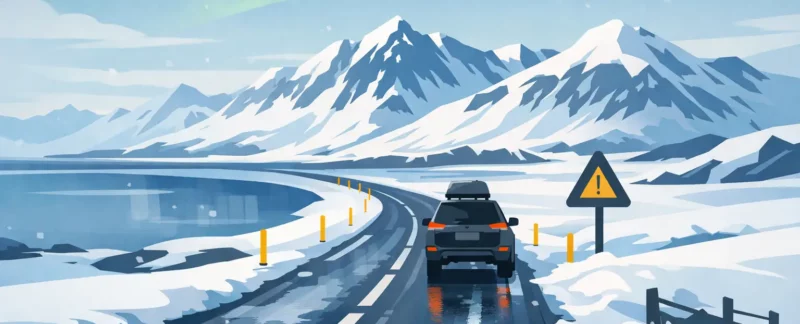
A road can look calm in North Iceland right up to the moment the wind shoves snow across it or a gravel section turns washboard rough. That is why North Iceland road conditions tips are less about memorizing rules and more about learning how this region behaves. Distances look short on a map, but weather, light, and road surface can change the day quickly.
If you are visiting for the first time, the biggest mistake is assuming roads here work like roads back home. They do not. A beautiful route can also be narrow, icy, blind over hills, or temporarily impassable. None of that means you should be nervous about traveling here. It just means a little local judgment goes a long way.
North Iceland road conditions tips start with the weather
In North Iceland, weather is not background information. It is part of the road itself. Snow, drifting, freezing rain, thawing, and strong crosswinds all affect how a drive feels and how long it takes.
Winter gets the most attention, for good reason, but shoulder seasons deserve respect too. In late fall and spring, the road may look mostly clear while shaded stretches stay icy. You can leave one area in dry conditions and arrive at a pass where visibility drops fast. That is common enough that experienced local drivers rarely assume the next valley will match the last one.
Wind is the part many visitors underestimate. Ice is obvious. Wind is not. It can push a vehicle sideways, make steering tiring, and create sudden whiteout conditions when loose snow blows across the road. Even on a day that seems manageable in town, exposed sections can feel very different.
The practical lesson is simple: judge the day, not just the destination. If the weather shifts, your plan should be allowed to shift with it.
Know what kind of road you are actually driving
Not every road in North Iceland asks for the same skills. Some main routes are paved and maintained regularly, but that does not make them automatically easy. In winter they can still be slick, snow-covered, or reduced to a single visible track between snowbanks.
Gravel roads are another category entirely. In dry weather they may be straightforward if you reduce speed and stay alert. After rain, thaw, or sustained traffic, they can become loose, rutted, or uneven. Drivers unfamiliar with gravel sometimes brake too hard or steer too suddenly, which creates more trouble than the surface itself.
Then there are mountain and highland approaches, which are highly seasonal and not casual detours. Some roads that look tempting on a map are only suitable in a proper vehicle and only when conditions allow. A road being open at one time of year does not mean it is wise for every traveler.
This is where local knowledge matters. A route may technically be passable but still be a poor choice if you are tired, arriving late, or not comfortable on narrow gravel with no guardrails. Safe travel is not just about legal access. It is about margin.
Paved does not always mean easy
Visitors often relax once they are back on asphalt. That is understandable, but in North Iceland paved roads can still include frost, black ice, hard-packed snow, and strong wind exposure. Bridges may be narrow, shoulders can be soft, and visibility over crests is sometimes limited.
Treat paved roads here as more forgiving, not foolproof.
Gravel requires patience more than bravery
On gravel, speed is usually the problem. Slow, steady driving gives you options. Fast driving makes every loose patch feel dramatic. If you are heading toward remote sights, plan extra time so you are not tempted to rush.
Timing matters more than mileage
A route that says two hours in ideal conditions may take much longer in real North Iceland travel. That is not because anything has gone wrong. It is because road conditions, stops, and daylight all matter.
In winter, short daylight changes everything. You may begin in soft morning light and return in darkness on a colder road surface. In summer, long days can encourage people to overpack an itinerary. The trap there is fatigue. Long drives on quiet roads, even scenic ones, can wear down concentration.
My advice is to build slack into the day. If you think you need every minute to make a route work, the route is probably too ambitious. North Iceland rewards travelers who leave room for weather, coffee, photo stops, and the occasional change of plan.
Vehicle choice is part of your safety plan
The right vehicle does not make poor decisions disappear, but it does improve your margin for error. In winter especially, a larger vehicle with proper tires can make a real difference in stability and comfort.
That said, people sometimes focus too much on the vehicle and too little on the driver. Four-wheel drive helps with traction and confidence, but it does not shorten braking distance on ice the way many visitors imagine. If the road is slick, you still need to slow down well before turns, bridges, and intersections.
Ground clearance also matters on rougher roads, but only if the road and season call for it. Not every traveler needs a big vehicle. What matters is matching the vehicle to the route, season, and your own comfort level.
North Iceland road conditions tips for winter driving
Winter driving here can be beautiful and completely manageable on the right day. It can also become stressful quickly if you treat it like ordinary winter driving elsewhere. The combination of wind, open terrain, drifting snow, and limited daylight is what catches people out.
Start by accepting that cancellation or delay is sometimes the smart choice. That is not failure. It is sensible travel. If visibility is poor or roads are icy and exposed, the best decision may be to stay put or shorten the day.
When you do drive, reduce speed earlier than feels necessary. Brake gently. Keep more distance than you think you need. Small, calm steering inputs matter. So does avoiding sudden confidence after a few easy miles. Conditions are rarely uniform for long.
It also helps to keep your fuel level comfortably above empty in winter. Services are not everywhere, and weather can slow a day down. Dress as if you may need to step outside in freezing wind, not as if you are only moving from parking lot to cafe.
When local advice should outweigh your itinerary
Travelers often arrive with a fixed list of places they do not want to miss. I understand that. But North Iceland is a region where the best plan is often the plan that still makes sense at 9 a.m., not the one you wrote three months earlier.
If a local host, guide, or accommodation owner tells you a route is unwise that day, listen carefully. The value is not only in knowing whether a road is open. It is in knowing how that road tends to behave with a certain wind direction, recent snowfall, or thaw.
This is especially true for photographers and families. Photographers may be tempted by dramatic weather, and families may feel pressure to keep a full day on schedule. Both situations benefit from a calm second opinion. Sometimes the better experience comes from choosing a shorter route with more time outside and less tension in the car.
A few habits make a big difference
The safest drivers in North Iceland are usually not the boldest. They are the ones who stay observant and unhurried. They notice when the road begins to shine with frost, when the wind starts tugging at the vehicle, or when a gravel surface changes from firm to loose.
Pull over only where it is clearly safe and legal. Scenic roads invite sudden stops, but not every shoulder is stable, and not every viewpoint is a parking area. Keep your headlights on. Watch for one-lane bridges and blind rises. If another driver is moving faster, let them pass when there is a safe chance rather than letting pressure build behind you.
Most of all, avoid making the day harder because you want to salvage the original plan. There is no prize for stubborn driving in bad conditions.
If you want the scenery without the stress
For many visitors, the real question is not whether they can drive in North Iceland. It is whether they want to spend part of the trip watching the road instead of the landscape. That depends on the season, the route, and your confidence.
If you are uneasy about winter roads, remote gravel sections, or changing conditions around places like Mývatn, Dettifoss, or the Diamond Circle, going with a local driver-guide can be a much better use of the day. It gives you local judgment, flexibility, and the freedom to look out the window instead of gripping the steering wheel. That is one reason many guests who travel with Kip choose a private day tour for the more demanding routes and keep their self-drive days for easier weather and roads.
North Iceland is generous to travelers who respect it. Give yourself more time, less ego, and a plan that can bend with the weather, and the roads here usually feel a lot friendlier.
