
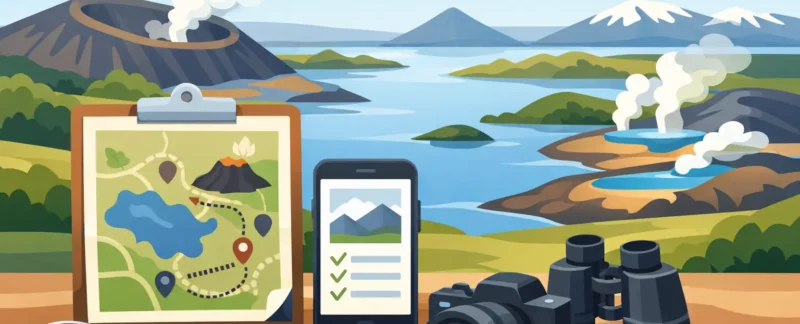
If you are wondering how to plan Myvatn itinerary time without turning the day into a race, start with one simple truth: Lake Mývatn looks compact on a map, but it is not a place to rush. The area rewards slow travel. A volcanic crater is five minutes from a geothermal field, but the experience changes completely if you arrive in the right light, with enough time to walk, stop, and take in what you are actually seeing.
That is the mistake many travelers make here. They treat Mývatn like a checklist instead of a landscape. You can drive between major sights fairly quickly, but each stop has its own pace, weather, and walking time. A better itinerary is not the one with the most pins on a map. It is the one that fits your season, energy level, and reason for coming.
How to plan Myvatn itinerary around your real priorities
Before you decide where to stop, decide what kind of day you want. Some visitors want a classic first visit with the well-known sights. Others care most about photography, geology, birdlife, easier walking, or avoiding crowded windows. Those are not small details. They should shape the whole route.
If this is your first time in North Iceland, a full day around Mývatn usually works best. That gives you time for the core highlights without constantly watching the clock. If you only have half a day, it is still worth going, but you need to be selective. In that case, choose two or three major stops and build around them.
The most common anchors are Skútustaðagígar, Dimmuborgir, Hverir, Grjótagjá, and the Mývatn Nature Baths. Depending on road conditions and your interests, you might also include Krafla and the Víti crater area. These places are close enough to combine, but not every stop belongs in every plan.
For example, Hverir is dramatic and easy to access, but it can feel harsh in strong wind. Dimmuborgir offers more walking options and has a different character entirely, with lava formations and gentler trails. Grjótagjá is small and memorable, yet it is usually a short stop, not the centerpiece of a day. The Nature Baths are a very good finish if you want a slower end to the itinerary, but less ideal if your main goal is hiking and covering ground.
Start with the season, not the map
This is where many itineraries go wrong. Summer and winter in Mývatn are not two versions of the same trip. They are different experiences, and your plan should reflect that.
In summer, you have long daylight hours and easier access to viewpoints and trails. That makes it tempting to overpack the day. You can see more, yes, but you still need margin for weather changes, insects near the lake, and the fact that some places deserve a longer stop than expected. Summer is ideal for combining the lake area with nearby detours, but only if you are comfortable with a long day.
In winter, the region becomes quieter, more dramatic, and less forgiving of unrealistic schedules. Road conditions, wind, and daylight matter more than ambition. A winter itinerary should be shorter, more flexible, and built around safe driving times. You may see fewer stops, but the experience can feel deeper because the landscape has such a strong mood.
Shoulder seasons sit somewhere in between. Roads are often fine, but conditions can change quickly. This is when local judgment becomes especially useful. A route that looks straightforward in the morning can feel very different later in the day.
Build your day in zones
A practical way to plan the area is to think in clusters rather than individual attractions. That helps you avoid zigzagging back and forth.
The south side of the lake often begins with Skútustaðagígar, where pseudocraters and lake views give you a gentle introduction to the landscape. From there, many travelers continue toward Dimmuborgir, which works well if you want a longer walk or a place to stretch your legs properly.
The east side and northeast side bring in the stronger geothermal and volcanic character. Hverir is one of the most striking stops in the region, with steam vents, mud pots, and colors that look almost exaggerated even when the weather is gray. Nearby, Grjótagjá adds a more intimate stop – small cave, warm water, and a sense of hidden geology rather than wide-open scenery. Krafla and Víti fit naturally in this zone if conditions are good and you want more of the volcanic story.
If you end the day at the Nature Baths, the itinerary gets a natural rhythm. Walks and viewpoints first, then geothermal bathing later when your legs are tired and the weather starts to matter less.
How much time do you actually need?
For most travelers, a good Mývatn day is six to eight hours if you are starting nearby. That usually allows for four to six meaningful stops, a meal break, and some room for weather or spontaneous pauses. If you are driving in from Akureyri or adding the area to a larger North Iceland route, expect a longer day.
Trying to fit everything into three or four hours usually leads to a windshield tour. You will technically see the area, but not really experience it. On the other hand, a two-day stay can be excellent if you prefer slower travel, winter conditions, or a mix of sightseeing and walking.
This is especially true for photographers and older travelers who do not want constant in-and-out stops. Mývatn is one of those places where fewer transitions often make for a better day.
A sample one-day route that works well
If you want a straightforward first visit, start with Skútustaðagígar in the morning when the light is often softer and the area feels calm. Continue to Dimmuborgir while your energy is still good enough for walking. After that, head toward Grjótagjá and Hverir, where the landscape becomes more raw and geothermal.
If conditions are favorable and you still have time, add Krafla. Finish with the Mývatn Nature Baths if that suits your style of travel.
That route works because it moves from gentle lake scenery into more active volcanic terrain. It also leaves some flexibility. If the weather turns, you can shorten a walk. If you fall in love with one stop, you do not have to ruin the whole day to stay longer.
Driving yourself or going with a local guide
Self-driving gives you independence, and for many travelers it works well in good conditions. But planning in Mývatn is not only about navigation. It is about timing, road confidence, weather judgment, and knowing which stops are worth more time for your specific interests.
That matters even more in winter, for families with mixed mobility, or for travelers who want a more relaxed day. A private guide can adjust the route in real time, explain what you are seeing, and keep the day from feeling like a string of parking lots. In a place shaped by lava, geothermal heat, sagas, farming history, and sudden weather shifts, context changes the experience.
For guests who want that kind of day, Kip offers private guiding built around the region rather than a fixed bus schedule. That is often the difference between simply visiting Mývatn and feeling like you understood it.
Small planning choices that make a big difference
Leave room for weather. That is not dramatic advice, just practical Iceland advice. A viewpoint in clear conditions can be a complete whiteout later. Build a plan that can bend a little.
Wear proper layers even in summer. The Mývatn area can feel mild one minute and sharply windy the next. If you are sensitive to uneven ground, check walking surfaces before you commit to every stop. Some places are easy and short. Others are easy enough, but better with sturdy shoes and a slower pace.
And do not underestimate transition time. Parking, walking from the lot, taking photos, warming back up, or simply standing still because the place is more striking than expected – these all count. A realistic itinerary feels generous. An unrealistic one feels strangely stressful in a landscape that should do the opposite.
The best Mývatn plan is usually the one that leaves a little unfinished. That may sound odd, but it is true. If you save space for weather, curiosity, and the occasional unplanned stop, the day starts to feel like travel rather than logistics. That is a much better way to meet this part of Iceland.
