
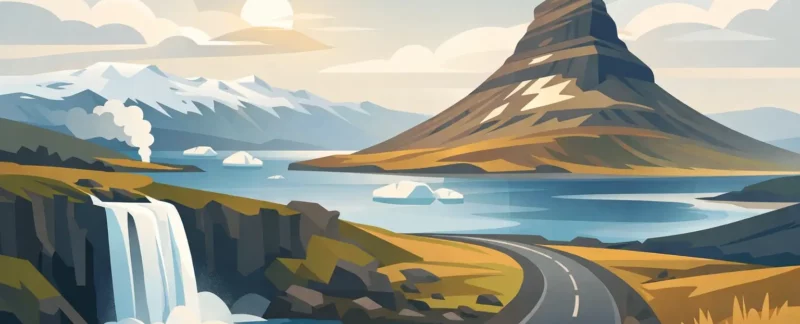
A waterfall with no one standing in front of it, low autumn light across the lava fields, and enough time to stop when something catches your eye: that is the appeal of Iceland shoulder season travel. It can be one of the best times to visit North Iceland, but it is not simply summer with fewer people. Weather changes faster, roads may close without much warning, and daylight shapes every plan. Travelers who leave room for those realities are often rewarded with a more personal experience of the country.
Iceland Shoulder Season Travel in North Iceland
In Iceland, shoulder season generally means spring, from about April through May, and fall, from September through October. The exact experience changes greatly within those months. Early April can still feel fully wintery in the north, while late May brings bright evenings, nesting birds, and roads that are gradually becoming easier to travel. September can offer green and gold landscapes with reasonable daylight, while October is darker, colder, and more likely to bring snow at higher elevations.
The advantage is not just quieter parking lots. The landscape feels different when it is not at its busiest. Around Lake Mývatn, for example, mist can sit over the water on a cool morning, geothermal areas steam more dramatically in cold air, and there is often time to linger at a viewpoint rather than follow a fixed bus schedule.
That said, shoulder season is not a bargain version of a summer trip. Some highland routes remain closed in spring and can close early in fall. A favorite restaurant or small local service may keep shorter hours. The right approach is to choose the season for what it is: more changeable, quieter, and often wonderfully atmospheric.
Choose Spring or Fall for the Experience You Want
Spring is a good fit for travelers who want increasing daylight and a sense of Iceland waking up after winter. Snow can still frame the mountains and cover parts of the countryside, while lower elevations begin to show color. Waterfalls are powerful as thawing snow feeds the rivers. Birdlife is also a major reason to visit, particularly around wetlands and coastal areas.
The compromise is that spring road conditions can be unpredictable. Gravel roads may be soft after thawing, and a bright morning can turn windy or snowy later in the day. If your dream itinerary depends on remote roads or the interior highlands, spring is not the time to assume access.
Fall is often especially appealing to photographers and travelers who enjoy moody weather. The light becomes softer and lower, the summer crowds thin, and clear nights can bring a chance of seeing the Northern Lights. September usually gives a comfortable balance of daylight and evening darkness. By October, aurora opportunities improve, but a shorter day requires more careful timing.
Fall weather can also be dramatic. Wind is often the deciding factor rather than temperature alone. A day that looks mild on paper may feel very cold near a waterfall, on an exposed coast, or while waiting outside after dark for the lights.
Let Road and Weather Conditions Set the Pace
A good North Iceland day does not begin with a rigid list of stops. It begins by checking the forecast, wind, road conditions, and visibility. Those details matter more in shoulder season because conditions can be very different only a few miles apart. A road near Akureyri may be clear while mountain roads farther east have snow, ice, or poor visibility.
Self-driving visitors should be conservative. Icelandic roads are not difficult because they are exotic. They become difficult when wind, darkness, ice, loose gravel, or sudden weather are added to an unfamiliar route. Never treat a closure as a suggestion, and do not make a highland plan based on an old social media post or a sunny forecast from the day before.
This does not mean staying indoors whenever clouds appear. North Iceland has plenty to offer in mixed weather. The Lake Mývatn area has geothermal landscapes, lava formations, waterfalls, and broad views that can all work beautifully with shifting light. On the Diamond Circle, a flexible route may mean adjusting the order of stops, choosing sheltered viewpoints, or spending more time where conditions are best.
A local guide can be particularly useful here, not because every day needs to be complicated, but because knowing when to change direction is valuable. Sometimes the best decision is to skip an exposed stop and take a quieter valley road. Sometimes waiting 30 minutes lets a rain shower move through and gives you the view you hoped for.
Plan Iceland Shoulder Season Travel Around Daylight
Daylight is generous in May and still very workable through much of September. It shrinks quickly in October, especially when weather slows driving. Rather than trying to see every famous place in one day, choose a route with a few meaningful stops and room for detours.
For a private day tour, that flexibility can make the day feel less like a checklist. You might spend extra time photographing Goðafoss in changing light, take a short walk where the wind is calm, or stop for coffee and a local story before continuing. Families may want more breaks. Serious photographers may want to begin early or stay late. Travelers who are less comfortable walking on uneven ground may prefer to focus on scenic locations with easy access. A thoughtful plan can accommodate all of these without rushing.
If Northern Lights are part of the trip, keep your daytime expectations realistic. An aurora outing works best when it is treated as a weather-dependent evening possibility, not a guaranteed event after an exhausting full day. Clear skies matter most, and the best viewing location may change with the forecast.
Pack for the Conditions, Not the Calendar
Shoulder season packing is simple if you think in layers. A warm insulating layer, waterproof outer shell, hat, gloves, and sturdy waterproof footwear will serve you well in both spring and fall. Windproof clothing is especially useful. An umbrella is rarely much help when the wind picks up.
Bring a small daypack so you can add or remove layers easily. Sunglasses are useful even on cold days, particularly when sunlight reflects off snow or water. A reusable water bottle, snacks, and a phone battery pack are sensible for longer days in rural areas.
Do not rely on a heavy winter coat alone. The best clothing system is one you can adjust when you move from a warm vehicle to a windy overlook, then onto a short walk beside a waterfall. Waterproof shoes matter more than many visitors expect. Trails can be wet, muddy, icy, or all three in the same week.
When a Private Guide Makes the Difference
Shoulder season rewards people who can adapt, and that is where a private guide offers real comfort. You do not have to spend the morning decoding road reports or wondering whether a distant cloud bank will affect your route. You can focus on the experience while someone who knows the area considers the practical details.
For travelers based in Akureyri, Laugar, or the Mývatn region, a tailor-made day can be built around the conditions and your interests. One group may want geology and geothermal landscapes. Another may be traveling with children and want a relaxed day with short walks. A couple may be hoping for quiet viewpoints and time for photographs. None of those needs require the same route.
At Kip, that local knowledge comes from guiding in this region through changing seasons, not from following one fixed itinerary. The goal is not to pretend Icelandic weather can be controlled. It is to make good choices within it and help guests feel safe, welcome, and unhurried.
The most memorable shoulder-season days are often the ones that leave a little space for surprise: a patch of sunlight on a mountain, a rainbow above a waterfall, fresh snow on black lava, or a quiet road that leads somewhere you had not planned to stop. Come prepared, keep your schedule flexible, and let North Iceland show you what it has that day.