
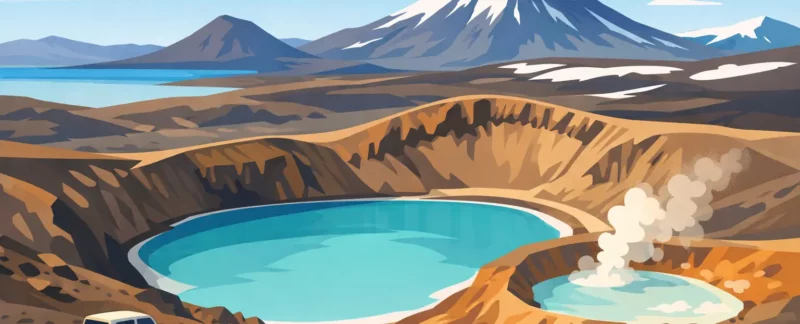
Askja is not the kind of place to squeeze between breakfast and dinner plans. It is a full highland day: long gravel roads, wide open desert, changing weather, and a volcanic landscape that makes the journey feel as memorable as the destination. Knowing how to plan an Askja daytrip well means allowing enough time, choosing the right vehicle and route, and leaving room for Iceland to change the plan.
For many visitors, Askja is one of the great days in North Iceland. The sight of the vast caldera, the blue water of Víti crater, and the black volcanic country around Dyngjufjöll can feel almost unreal. It is also remote. That remoteness is exactly why a little preparation makes such a difference.
Start With the Right Expectations
An Askja daytrip is usually a long one. From the Mývatn area, Laugar, or Akureyri, expect a full day in the vehicle and the highlands, often 10 to 14 hours door to door depending on road conditions, your starting point, stops along the way, and how much walking you would like to do.
This is not a complaint. The drive is part of the experience. The route passes lava fields, mountain roads, rivers, and immense empty spaces where it is easy to understand why Icelanders still speak of the interior with respect. But travelers who expect a quick sightseeing stop can be disappointed. Plan Askja as the main event of the day, not an add-on.
The season matters just as much as the distance. Highland roads are normally open only in summer, and opening dates vary from year to year. Snow can linger near Askja long after lower roads are clear. Even in midsummer, cold wind, fog, rain, or fresh snow are all possible. A sunny forecast in town does not guarantee a sunny caldera.
How to Plan an Askja Daytrip Around Road Conditions
The first practical question is not “What time should I leave?” It is “Which roads are open, and what are they like today?” Roads into Askja are mountain roads, often called F-roads. They can be rough, slow, and subject to sudden closures after weather or river changes.
A capable 4×4 is essential for the normal highland approaches. Some routes involve river crossings, while others may be less demanding but still require real ground clearance, patient driving, and confidence on uneven surfaces. Conditions change too much for a route description from last week, or even yesterday, to be treated as a promise.
Before setting out, confirm the current road status and ask specifically about river crossings, visibility, and snow near the Askja parking area. If a road is closed, do not drive around a barrier or assume that a rental vehicle can handle it because another vehicle has passed. Highland rescue is not a casual inconvenience, and off-road driving damages a landscape that takes centuries to recover.
If you are unfamiliar with F-roads, a private guided trip is often the more relaxed choice. You can spend your attention on the landscape instead of reading the road, judging water levels, and wondering whether the next rough section is normal. With Kip, the day can also be adapted to the actual conditions rather than following a fixed timetable that no longer makes sense.
Choose a Route for the Day You Have
There is more than one way toward Askja, and the best approach depends on the roads, weather, and your group. The F88 route is famous for its rugged character and river crossings. Other approaches can be more suitable on certain days, but they are still highland roads, not regular highways.
A good plan does not insist on one route for the sake of a map. It considers who is traveling. A family with young children, guests who prefer a smoother ride, serious photographers hoping for late-day light, and confident hikers may all benefit from different timing and choices. In the highlands, flexibility is not a luxury. It is sensible travel.
Give Yourself Time at Askja
Once you reach the main parking area, Askja is still not simply a view from the windshield. The walk toward Víti and the caldera is relatively short for many visitors, but the surface is uneven and exposed. In clear conditions, allow time to walk slowly, take photographs, and absorb the scale of the place.
The walk is commonly around 1.5 miles round trip, depending on where you begin and which viewpoints you choose. It is not technically difficult for most reasonably mobile travelers, but wind and cold can make it feel more demanding. The ground can also be slippery when wet or covered in snow.
Víti means “hell” in Icelandic, which is a fine dramatic name for a crater lake with pale blue water. Its appearance changes with cloud, sun, and season. On a bright day, the colors can be striking. In fog, Askja can become quiet and mysterious, with the edge of the caldera appearing and disappearing around you. Both experiences have their own character, but fog is a reason to stay close together and follow the marked path carefully.
Do not build your entire day around bathing in Víti. Access and safety conditions can change, the water temperature is not uniform, and the steep crater path may not be suitable. Treat it as a place to see first. If conditions allow more, that is a bonus rather than a guarantee.
Pack for Exposure, Not for the Temperature at Breakfast
The highlands are open country. There is little shelter from wind, and the weather can change while you are standing at a viewpoint. Dress in layers, with a windproof and waterproof outer shell. Warm gloves and a hat can be welcome even in July, especially for anyone who gets cold easily.
Bring sturdy walking shoes or hiking boots with good grip. Sneakers may be fine on a dry, easy day, but they are less comfortable on loose volcanic ground and offer little support when the weather turns wet. A small daypack is useful for water, snacks, an extra layer, and a camera.
For a comfortable Askja day, these four items earn their place every time:
- Waterproof outer layers, including rain pants if you have them
- Warm hat, gloves, and an insulating mid-layer
- Sturdy shoes with traction for volcanic paths
- Water, lunch, and extra snacks for a long day
Facilities are limited in the interior, so it is wise to use restrooms when they are available and carry out everything you bring in. This is a fragile landscape, even when it looks like nothing could possibly grow there.
Plan the Day for Your Group, Not a Generic Itinerary
Askja rewards travelers who avoid overpacking the schedule. It can be tempting to add waterfalls, geothermal areas, or a long hike before or after the highlands. Sometimes that works, especially with a very early start and favorable roads. Often it turns a memorable day into a rushed one.
Think about your priorities before leaving. If photography matters most, you may want longer stops and the freedom to wait for light. If you are traveling with children or older family members, regular breaks and a gentler pace may be more valuable than ticking off every possible stop. If Askja is your one chance to experience the Icelandic highlands, keep the itinerary focused enough that the place has time to sink in.
A local guide can help make those decisions before the day begins. That may mean choosing a route with fewer difficult crossings, adjusting departure time for weather, or deciding that another highland destination is the better call when Askja is not showing its friendly side. Changing plans is not a failed trip. Sometimes it is the judgment that keeps a trip safe and enjoyable.
Leave Space for the Unexpected
The best Askja daytrips tend to have a little breathing room. A road may take longer than expected. Low cloud may lift after lunch. A reindeer may appear in the distance, or the light may suddenly turn the lava a deep copper color. None of that fits neatly into a tight schedule.
Set out prepared, respect the conditions, and let the highlands set the pace. Askja has been here through eruptions, storms, and long winters. It does not need to be rushed to be impressive.
