
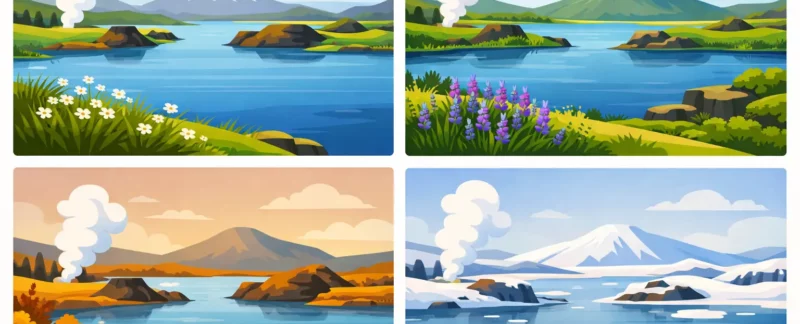
Mývatn can look calm from a distance: a broad lake, soft green slopes, steam rising from the earth. Then the wind changes, fog comes over the lava, or you realize that the ground beside a trail is hot enough to burn through a shoe. That contrast is part of its character. If you are wondering how to explore Myvatn safely, the answer is not to rush from stop to stop. Give the weather, the roads, and the landscape the respect they deserve.
I grew up near this lake, and I still find that each visit asks for a little attention. A safe day here is usually a better day too. You see more when you are not worried about the next turn, a sudden gust, or whether your rental car belongs on the road ahead.
How to Explore Myvatn Safely Starts Before You Drive
Conditions in North Iceland change quickly, including during months that look mild on paper. Check the weather forecast and current road conditions on the morning of your trip, not only when you make your itinerary. Wind speed matters as much as temperature. Strong crosswinds can make driving tiring, affect car doors when you park, and make exposed viewpoints unpleasant or unsafe.
Build a flexible plan. If low cloud hides the Krafla highlands, spend more time around the lake or visit an indoor geothermal bath. If wind is pushing hard across open ground, choose shorter walks in sheltered areas rather than forcing a long hike. Travelers sometimes treat a fixed schedule as the main goal. Around Mývatn, good judgment is the goal.
Bring warm layers even in summer, along with a waterproof outer layer, sturdy shoes, water, snacks, and a fully charged phone. Icelandic weather does not wait for a convenient time to become cold and wet. In winter, add a hat, gloves, traction aids if you are walking independently, and a small flashlight or headlamp. Daylight is limited, and parking areas can be icy before you notice it.
Let someone know your plan if you are heading beyond the main sights. Keep emergency number 112 saved in your phone. Coverage is generally good around popular areas, but it is not wise to assume it will be perfect in every lava field or mountain pass.
Drive for Conditions, Not for the Speed Limit
The roads around Lake Mývatn connect some of North Iceland’s best-known natural sites, but familiar does not mean effortless. Rain, frost, loose gravel, drifting snow, and wind can all change the experience. Slow down well before bends and gravel sections, leave generous space behind the vehicle in front of you, and avoid stopping in narrow road shoulders simply because the view is beautiful. There will be a safer place ahead.
In winter, a vehicle that is suitable for the season makes a real difference, but it does not replace careful driving. Roads may close temporarily due to snow, wind, or poor visibility. When they do, take the closure seriously. Trying to get around a closure can put you, rescue workers, and other travelers at risk.
The route to Hverir and the main roads around the lake are very different from mountain roads. Do not take a standard rental car onto F-roads or rough highland tracks unless both the vehicle agreement and conditions clearly allow it. Routes toward remote places such as Askja require more preparation, suitable vehicles, and a proper understanding of river crossings and weather. They are not a casual extension of a Mývatn sightseeing day.
If you would rather spend the day looking out the window than concentrating on the road, a private guide is a sensible choice. It also gives you room to adjust plans when local conditions suggest a quieter route, a better photo stop, or an earlier return.
Stay on Marked Paths Near Geothermal Ground
Mývatn is part of an active volcanic region. At Hverir, Krafla, and other geothermal areas, the colors and steam are extraordinary because the ground is alive with heat and gases. That is precisely why the marked paths matter.
Do not step over ropes, walk onto pale crusts, or test the ground with a hiking pole. Thin surfaces can hide boiling mud or scalding water. Keep children close, particularly where steam reduces visibility or paths pass near hot features. Sulfur smells are normal here, but if the fumes feel irritating or overwhelming, move away from the steam and into fresher air.
The same care applies to lava. Dimmuborgir is a wonderful place to walk, but lava is uneven, sharp, and easy to misjudge when wet or icy. Choose a route that matches the mobility and confidence of everyone in your group. A short, relaxed loop is often more rewarding than a longer trail completed with sore ankles and fading light.
Some visitors are drawn to Grjótagjá, the small lava cave known for its striking geothermal water. Treat it as a viewing site, not a swimming spot. Water temperatures can be dangerously hot and vary over time. Respect signs, barriers, and the space itself.
Give Wildlife and the Lake Shore Room
Mývatn means “midge lake,” and in summer the name makes sense. The small flies are harmless, but they can be persistent on still, warm days. A head net is a simple piece of gear that can make a walk far more pleasant. Avoid heavy scented products if insects bother you, and keep a sense of humor. They are part of the local ecosystem, not a personal insult.
The lake is also an important habitat for birdlife. Watch quietly, keep dogs under control where permitted, and do not approach nests or young birds for a photograph. The pseudocraters at Skútustaðagígar and the wetlands around the lake are fragile landscapes, shaped by volcanic activity and protected by the behavior of every visitor who walks there.
Stay on trails even when a shortcut looks harmless. Off-trail footsteps can damage moss and soft ground that take many years to recover in Iceland’s short growing season. Taking care of the landscape is not separate from travel safety. Clearly marked routes are usually safer underfoot, easier to navigate, and better for the places you came to see.
Choose the Right Rhythm for Your Season
Summer gives you long daylight, open roads, and more time to combine Mývatn with waterfalls, canyons, or the coast. It can also bring rain, wind, busy parking areas, and midges. Start early or visit later in the evening for a quieter feel. Even with abundant light, do not underestimate how quickly fatigue builds after a long driving day.
Autumn can be peaceful and richly colored, but darkness arrives earlier and the first icy conditions may appear. This is an excellent season for photography, provided you leave enough time to drive slowly and return before visibility declines.
Winter is beautiful here, especially when snow settles over lava formations and the northern lights are possible. It also asks more of visitors. Daylight is short, trails may be buried or slick, and a road that was easy yesterday can be difficult today. Keep plans modest, dress for standing still in cold air, and never stop in an unsafe place to watch the sky.
Spring is perhaps the most changeable season. Thawing roads, slush, wind, and lingering snow can all appear in one day. The upside is a feeling of space and transition, with returning birds and fewer visitors. Flexibility is especially valuable then.
A Local Guide Can Take the Pressure Off
There is no prize for seeing every attraction around Mývatn in a single day. The best route depends on the season, your walking ability, the weather, and what interests you most. A family with young children may want short walks and time to warm up. A photographer may prefer early light, changing weather, and fewer stops. An experienced hiker may be comfortable with more uneven ground, while another traveler may simply want a beautiful day without winter driving.
A private day with Kip can be shaped around those differences, with local knowledge of roads, weather patterns, and places that suit the day you actually have. More importantly, you can ask questions as you go. Mývatn has stories in its lava, farms, birds, geothermal fields, and weather. Knowing when to slow down leaves room to hear them.
When you stand beside the lake, take a moment before moving on. Check the wind, look at the sky, make sure everyone is warm, and choose the next stop with care. Mývatn is not a place to conquer. It is a place to meet on its own terms.
