
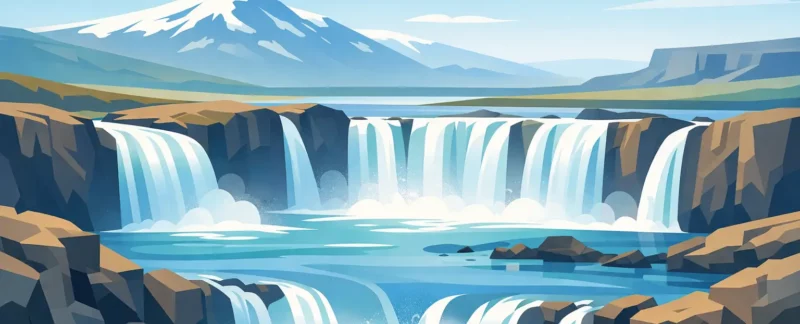
Goðafoss can look calm from one viewpoint and thunderous from another. Dettifoss sends spray across the canyon on a windy day. Aldeyjarfoss stands in a quieter valley, framed by striking basalt columns. A waterfall tour north Iceland is not simply a matter of ticking off famous names. The roads, weather, daylight, walking ability, and your own interests all shape which waterfalls make sense on a particular day.
For visitors based near Akureyri, Lake Mývatn, or Laugar, a private day with a local guide offers time to experience these places rather than rush through them. You can stop when the light changes, take the easier path if needed, hear why the landscape looks the way it does, and adjust when Icelandic conditions have other plans.
What a Waterfall Tour in North Iceland Can Include
North Iceland has waterfalls with very different personalities. Some are close to the main road and suit nearly every visitor. Others require a longer drive, a rougher approach, or a short hike over uneven ground. The best route depends on whether your priority is dramatic power, geology, photography, a relaxed family day, or reaching places beyond the usual stops.
Goðafoss is often a natural starting point. Fed by the Skjálfandafljót River, it spreads in a broad curve across the lava rock, with viewpoints on both sides of the river. It is accessible in most seasons, although icy paths in winter still call for care. Its historical story, connected with Iceland’s conversion to Christianity around the year 1000, adds another layer to the view.
Aldeyjarfoss is a different experience. The Skjálfandafljót narrows and drops into a pool surrounded by dark, geometric basalt columns. The contrast of pale water, black stone, and open highland valley is memorable, especially for photographers. Reaching it is more dependent on road and weather conditions, so it works best as part of a flexible private itinerary rather than a fixed promise.
In the northeast, Dettifoss is the great force of the Diamond Circle. It is often described as Europe’s most powerful waterfall by volume, but the number does not prepare you for the sound or the vibration underfoot. Nearby Selfoss offers a wider, more delicate series of falls along the same river. Visiting both gives a better sense of the Jökulsá á Fjöllum river and the canyon it has carved through volcanic terrain.
The east or west side of Dettifoss
The access road and viewpoint you choose matter. One side can offer a more direct, close view of Dettifoss, while the other may suit a route that also includes Ásbyrgi and other Diamond Circle locations. In summer, gravel-road conditions, dust, and traffic can influence the day. In winter, access may be limited or unavailable.
There is no universally correct side. A guide can select the route based on current road information, the direction of wind and spray, available daylight, and whether you prefer short walks or want to spend more time photographing the falls. This is one of the practical differences between a private trip and an itinerary built around a rigid timetable.
Waterfalls that fit the day, not the brochure
A longer waterfall day can combine a major stop with quieter valleys, hot springs, lava fields, or a farm lunch if that is what interests you. A shorter day might focus on Goðafoss and the landscapes around Lake Mývatn, leaving plenty of time to walk, take photographs, or simply enjoy the scenery without watching the clock.
For some guests, the goal is to see the most famous falls. For others, it is to find a location where they can stand alone for a few minutes and listen to the water. Both are good reasons to travel. The route should be designed around the experience you want, not around collecting the greatest number of pins on a map.
Why Local Conditions Matter More Than Distance
On a map, North Iceland can appear compact. In reality, a short-looking route may include gravel roads, mountain passes, single-lane bridges, snow, fog, or strong crosswinds. A waterfall that is easy to reach in July may be inaccessible in April or require a completely different plan in November.
Weather also changes the character of a waterfall. Overcast skies can be excellent for photography because they soften contrast on white water. Clear weather may reveal distant mountains and bring warmer light late in the evening. Wind can make the spray around Dettifoss uncomfortable, while a recent rain may turn smaller streams into surprising features along the road.
This does not mean travel needs to feel uncertain. It means the plan should have room to adapt. A good guide checks conditions before departure and continues to read the day as it unfolds. If a road is closed, there may be another valley worth visiting. If visibility is poor at one stop, a cultural site, geothermal area, or lower-elevation waterfall can make better use of the time.
As someone raised near Lake Mývatn, Kristinn Ingi Pétursson brings local context that goes beyond directions. The river systems, lava formations, settlement history, and seasonal rhythms are part of the story of each stop. A waterfall is more interesting when you understand where its water comes from and why the rock beneath it has the shape it does.
Planning Your Waterfall Tour in North Iceland by Season
Summer offers long daylight hours and the broadest range of road access. It is the best period for combining remote waterfalls with longer walks or an extended Diamond Circle route. The trade-off is that popular places can be busy in the middle of the day, particularly when several tour groups arrive at once. A private schedule can start earlier, linger later, or use less obvious stops to create breathing room.
Autumn brings lower light, changing colors in the birch and heath, and often fewer visitors. Conditions can shift quickly, though, especially on higher roads. This season suits travelers who appreciate atmosphere and are happy to let weather guide the route.
Winter waterfall tours are beautiful but require a more cautious approach. Snow and ice can transform familiar paths, daylight is limited, and remote roads may close. Goðafoss can be particularly impressive in winter, with ice forming around the riverbanks, but safe footwear and realistic expectations are essential. A private guide can match the outing to the conditions and your comfort level rather than pushing toward a distant stop that is not sensible that day.
Spring is a season of change. Melting snow swells rivers, migratory birds return, and road access gradually improves. It can be a rewarding time for travelers who value fewer crowds and understand that the exact route may remain flexible until close to departure.
A Few Practical Details That Make the Day Better
Waterfalls create their own weather. Bring a waterproof outer layer even if the forecast looks friendly, and keep a warm midlayer in the vehicle. Waterproof footwear with a solid grip is far more useful than fashionable shoes. Near large falls, spray can soak clothing and camera gear quickly.
Tell your guide in advance about mobility needs, young children, photography plans, or any places you especially hope to see. This helps shape sensible walking distances and timing. Families may prefer more breaks and easier viewpoints, while photographers may want to wait for shifting clouds or return to a location when the light is better.
A private waterfall tour should also leave space for small, unplanned moments: a reindeer beside the road, fresh snow on the mountains, a quiet coffee break, or a story about the people who have lived in these valleys. North Iceland is at its best when there is time to notice it.
Choose the waterfalls that fit your season and your pace, then let the road between them be part of the day too.